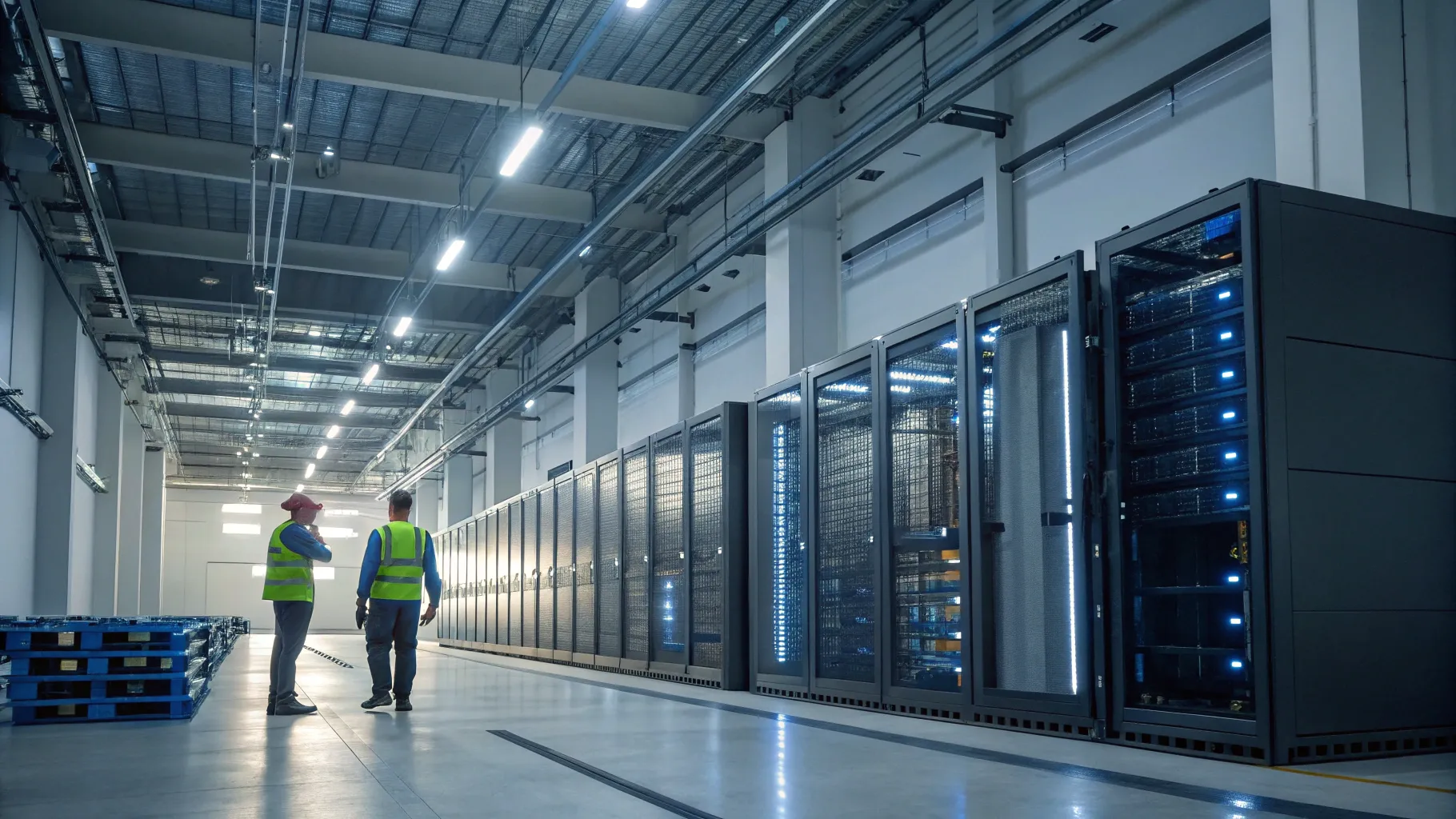
I watch the way organizations build data centers today and I see the contours of an industrial revolution. The demand for compute, driven by large-scale AI models and services, is forcing us to change more than hardware choices. It is changing how we design, manufacture, and assemble the environments that host that hardware. The phrase I keep returning to is industrialize the buildout. That means treating data centers like factories: repeatable, modular, prequalified, and optimized end to end.
The conversation that crystallized this for me landed on a simple but powerful framing. As Dr. Emily Chen put it,
"We have to think that power train, the thermal chain, the whole prefabrication, as ways to industrialize the way we build data centers like we've never done before."
That sentence contains the three interlocking themes I want to unpack: power train, thermal chain, and prefabrication. Together they form the spine of what I call an AI factory: an integrated approach to designing, building, and operating purpose-built facilities for AI workloads. In this article I will lay out why this shift matters, what it looks like in practice, and how teams can move from bespoke construction to industrialized delivery without sacrificing performance or reliability.
Why industrialization is urgent 🔧
The pace of AI adoption is accelerating in a way that imposes new constraints on infrastructure teams. Training and inference clusters are growing in size and power consumption, and the timelines to deliver capacity are shrinking. Meeting these needs with classical, site-by-site, bespoke data center construction is becoming impractical, expensive, and slow.
There are several forces driving the urgency.
- Density and power scaling. Modern AI racks draw far more power per rack than traditional enterprise racks. A single AI cluster cabinet can easily require tens of kilowatts, and dense GPU pods push that figure higher. This drives the need for higher-capacity power distribution, specialized cooling, and refined electrical one-lines.
- Time-to-capacity pressures. Businesses want compute faster. Delays in deploying capacity directly slow development cycles and revenue. Prefab and modular approaches can cut deployment time dramatically compared to ground-up construction.
- Supply chain complexity. Long lead times for transformers, switchgear, and specialized cooling systems introduce risk. Industrializing design and standardizing components allow teams to forecast, batch purchase, and avoid one-off lead time surprises.
- Operational scale. When a company is building tens or hundreds of megawatts across regions, repeating custom designs consumes engineering bandwidth. Standardization multiplies the effectiveness of each engineer.
- Sustainability and compliance. Regulation, corporate sustainability goals, and community expectations require careful energy planning and the ability to report on emissions and efficiency consistently.
Given these pressures, the alternative to industrialization is expensive bottlenecks: delayed deployments, inconsistent site performance, higher operating cost, and an inability to scale predictably. That is why rethinking the build process—starting with power and cooling and ending with prefabrication—is not theoretical. It is strategic.
Power train: the backbone of AI facilities ⚡
When I say power train, I'm talking about the full electrical path from the grid or microgrid to racks and accelerators. Too often power distribution is treated as a series of boxes—utility meter, transformer, switchgear, PDUs—but in high-density AI sites those boxes must be designed as a continuous system.
Here are the practical implications I focus on when engineering power trains for AI factories.
- Higher voltage distribution. To reduce conductor losses and footprint, many teams are moving to higher intermediate voltages for distribution within the site. This reduces copper mass and improves PUE when done with compatible PDUs and rack-level transformers.
- Transformer strategy. Transformers are long-lead, capital-intensive items. I recommend treating them like tooling: standardize on a small set of sizes and connection methods, and deploy a transformer footprint that supports both present and future needs. Consider modular transformer skids that can be installed quickly and scaled in place.
- Redundancy patterns. Traditionally we used N+1 or 2N designs, but AI workloads and edge use cases may tolerate different trade-offs. Define redundancy at the load-group level based on SLAs and workload placement, not on inherited data center norms.
- Monitoring and power analytics. You cannot optimize what you do not measure. Integrate granular metering at the feeder, PDU, and rack levels. Use analytics to identify inefficiencies, load imbalance, and opportunities to shift workloads for energy savings.
- Integration with renewables and storage. For sustainability and resiliency, design the power train to accept distributed generation and battery storage. That means planning for bi-directional inverters and control planes that can orchestrate grid-following and grid-forming strategies.
Designing the power train as an integrated subsystem unlocks downstream benefits. When power delivery is predictable, thermal systems can be designed around known heat loads, and prefabrication becomes feasible because the electrical interfaces are standardized and repeatable.
Thermal chain: cooling that keeps up with compute ♨️
Cooling is no afterthought in an AI factory. The thermal chain describes the sequence of systems that capture, transport, and reject heat from servers to the environment. For high-density racks, conventional air cooling strains under the load; liquid cooling and hybrid approaches often become the default.
Key elements I always include in the thermal chain discussion:
- Heat capture at the source. Server-level liquid cooling, direct-to-chip cold plates, and rear-door heat exchangers capture heat more effectively than relying solely on room airflow. Capturing heat at the source reduces the volume of air moved and improves thermal control.
- Secondary fluid loops. Using a secondary glycol or dielectric fluid loop isolates the primary data center equipment from the external environment and allows centralized heat rejection strategies. Standardizing these loops across sites improves maintainability.
- Efficient heat rejection. Whether using dry coolers, adiabatic systems, or chilled water, the rejection stage should be matched to the site's climate and energy objectives. In many cases, free cooling is achievable for much of the year when designs prioritize low-pressure-drop and high-temperature coolant strategies.
- Waste heat reuse. At scale, the thermal energy leaving data centers is a resource. District heating, greenhouses, and industrial partners can use that waste heat. Designing for heat capture makes these integrations possible.
- Thermal controls and instrumentation. Distributed sensors and model-predictive control let you push cooling systems to operate at the limits of efficiency while protecting hardware. Treat the access control and telemetry as part of the cooling system design.
I often say the thermal chain is where the economics of AI factories get fixed or fractured. Efficient heat handling reduces operating expenses, extends hardware life, and opens sustainability opportunities. It also interacts tightly with the power train: higher supply voltages and reduced losses change waste heat profiles; conversely, efficient cooling can allow higher power density without overheating.
Prefabrication: building in the factory, not onsite 🏗️
Prefabrication is the lever that turns integrated power and thermal designs into repeatable outcomes. When I think about prefabrication, I imagine a production line that assembles fully tested power skids, cooling modules, rack clusters, and cable harnesses. These units arrive on-site prewired, pretested, and ready to be dropped into place.
Prefabrication delivers three major benefits:
- Speed. A prefabricated module takes days or weeks to install, not months. That accelerates time to capacity and reduces on-site labor costs.
- Quality and reliability. Factory conditions allow tighter quality control and better testing before deployment, which reduces commissioning issues and improves uptime.
- Standardization. Standard modules are predictable. They make lifecycle management easier, from maintenance to upgrades and decommissioning.
Practical implementation steps I recommend for teams exploring prefabrication:
- Define module granularity. Determine if your building blocks are rack clusters, row-level power and cooling skids, or entire ISO containers. The right granularity balances transportability against integration complexity.
- Standardize mechanical and electrical interfaces. Connectors, flanges, and control interfaces must be standardized to allow plug-and-play installation.
- Adopt vendor-agnostic specs. Create performance and interface specifications that allow multiple suppliers to compete on modules, which reduces vendor lock-in and improves supply chain resilience.
- Invest in predeployment testing. Use burn-in tests, electrical load tests, and leak detection in the factory. Capture telemetry during these tests to create a digital twin of the module.
- Design for transportation and installation. Consider weight, size, and lifting points. A perfectly engineered module that cannot be transported is a failed design.
Examples I follow closely include containerized data centers, prefabricated electrical rooms, and modular mechanical plants. When power trains and thermal chains are designed as modular subsystems, prefabrication becomes a natural extension that multiplies the advantages of standardization.
Designing facilities for AI workloads 🤖
AI workloads have distinct characteristics. Training clusters have bursty but sustained high-power consumption and generate concentrated heat at the board and chip level. Inference clusters may have different latency and availability requirements. Designing facilities around these patterns is an exercise in aligning physical infrastructure with workload behavior.
Here are the design principles I use when I map workload requirements to facility design.
- Characterize the workload. Understand the average power, peak power, duty cycle, and expected utilization patterns. Dont design for peak-only without considering how often you will hit that peak.
- Plan for gradient density. Not every rack will be a full-blown GPU pod. Reserve space and power capacity for high-density clusters while keeping some racks for lower-intensity background services.
- Optimize rack topology. Network and power topologies should reduce cable length, avoid hot spots, and support maintenance without disruption. Consider pod-level networking and power distribution that allows isolated replacement of a failed node.
- Support rapid scaling. Include stubbed capacities for power and cooling that enable adding capacity without major shutdowns. This can be achieved with spare feeders, oversized chilled loops, and flexible PDU mounts.
- Security and physical separation. Depending on workloads, you may need physical isolation, restricted environmental access, and stricter power and cooling SLAs for critical pods.
When I guide teams on mapping compute to facility, I insist on co-design sessions with platform, networking, and facility engineers. The earlier power and cooling constraints are reflected in cluster architecture, the fewer surprises appear during commissioning.
Operational playbook for rapid buildouts 📋
Standardizing design and prefabrication is not enough. You need an operational playbook that turns design into repeatable execution. That playbook must cover procurement, testing, installation, commissioning, and handoff to operations.
These are the components I include in a practical operational playbook.
- Procurement templates. Create a library of purchase orders, acceptance criteria, test protocols, and warranty terms for modular components. This saves time and keeps quality high across multiple sites.
- Installation sequencing. Define the step-by-step sequence for installing modules, interconnections, initial power-up, and staged load application. Sequence risks like backfeed and grounding faults are mitigated when the steps are consistent.
- Commissioning checklists. Use formal checklists that include electrical tests, thermal validation, leak tests, and digital telemetry validation. Capture results in an immutable record linked to the module serial number.
- Handoff documentation. Provide operators with a module-level manual that includes failure modes, replacement parts, and troubleshooting guides. The more a module behaves like an appliance, the easier it is to operate.
- Training and simulation. Run simulated failures and recovery drills in a controlled environment. Make sure operations teams can replace a power skid, reconfigure thermal loops, or isolate a failed rack with minimal operational impact.
- Digital twins and telemetry. Build a digital twin for each module and site. Telemetry feeding into the twin lets you run what-if scenarios and identify early signs of degradation before they become incidents.
There is a cultural element to operationalizing industrialized buildouts. Teams must shift from a craft mindset to a production mindset. That means investing in repeatable processes, tooling, and training that make each deployment predictable and safe.
Sustainability and energy strategy 🌱
AI factories consume significant energy, and the environmental implications matter to customers, regulators, and communities. A sustainable approach to industrialization is not only ethical; it also reduces operating cost and regulatory risk.
Here are the sustainability levers that I prioritize.
- Renewable procurement. Contracting for offsite renewable energy, investing in onsite solar, and participating in virtual power purchase agreements help lower the carbon footprint of compute.
- Energy efficiency. Every watt saved in the facility reduces direct and indirect emissions. Improving PUE through efficient power trains and thermal chains can be a major lever.
- Waste heat utilization. As I mentioned, waste heat is a resource. Partnering with local industrial users or district heating networks turns a liability into a revenue or sustainability win.
- Battery and load management. Batteries can be used for resiliency and for demand shaping. Intelligent orchestration lets you shift noncritical workloads to periods of renewable surplus.
- Lifecycle thinking. Design modules to be repairable, upgradeable, and recyclable. Avoid one-off items that become e-waste when hardware refreshes happen.
Sustainability does not have to come at the cost of performance. When I approach design with both goals in mind, I often find synergies—higher-efficiency cooling reduces waste heat and lowers energy bills, while standardized modules open pathways for circular supply chains.
Organizational changes to enable scale 🔁
Industrializing AI factory construction is as much about organizational design as it is about technical design. Building at scale demands different roles, new workflows, and stronger partnerships across the supply chain.
Organizational moves I have seen work well include:
- Cross-functional squads. Form squads composed of facility engineers, IT architects, procurement specialists, and project managers. These teams own a module or a site type end to end.
- Vendor integration teams. Rather than treating vendors as commodity suppliers, create vendor integration teams that co-develop module designs, support prequalification, and manage factory acceptance testing.
- Center of excellence. Run a central team that codifies standards, stores lessons learned, and maintains a parts registry. Local teams then execute using central artifacts.
- Performance-based procurement. Shift contracts from specifying components to specifying performance outcomes such as heat removal per kW, commissioning time, and lifetime maintenance costs.
- Continuous improvement loops. Capture telemetry and field observations. Use that data to refine designs and procurement specs for future modules.
These organizational shifts reduce friction and create a flywheel. The repeatability enabled by standard modules means the teams can invest time in continuous improvement rather than reinventing designs for every site.
Real-world examples and lessons learned 🧭
I want to share a few illustrative examples that capture how these ideas play out in practice. These are composite cases drawn from patterns I see across the industry.
Large cloud provider: modular megawatt campuses
A global cloud provider standardized a 20 MW campus design built from modular electrical and mechanical skids. Transformers and switchgear arrived as preassembled units. Liquid-cooled rack clusters were installed on factory-built plinths with integrated leak detection and quick-disconnect plumbing. The results were dramatic: site delivery times dropped by 40 percent, commissioning failures dropped, and the provider could bid on new markets with predictable timeline commitments.
AI startup: containerized compute for rapid experimentation
An AI-midstage startup used containerized GPU clusters to deploy capacity close to research teams. They used a modular power train with standardized PDUs and a closed-loop cooling skid optimized for their GPU pods. Because they could ship fully tested containers, the engineering teams could spin new compute clusters in weeks rather than months, accelerating experimentation cycles.
Edge and telco: thermal chains matched to climates
A telco deploying edge sites across varying climates developed two thermal chain templates: one for cool temperate climates using free-air cooling and one for warm or humid climates relying on liquid-assisted heat rejection. The templates allowed them to procure the same rack and PDU modules but choose the thermal module appropriate for site climate, reducing design effort and improving reliability.
Across these examples the common lessons are clear. First, early co-design between compute and facilities prevents costly rework. Second, investing in factory testing pays off in reduced commissioning load. Third, standard interfaces between modules and between modules and site infrastructure unlock flexibility in deployment.
Roadmap: how to industrialize your AI factory in stages 🛣️
Transitioning from bespoke builds to industrialized AI factories is a journey. I recommend a staged roadmap that balances risk and value.
- Assessment and prioritization. Start by cataloging existing sites, lead times for critical components, and failure modes. Identify the top bottlenecks that, if fixed, would accelerate delivery most.
- Standardize one module. Pick a small, high-impact module—maybe a rack cluster with a specific power and cooling specification—and standardize it. Use this as a learning vehicle.
- Build factory testing capabilities. Invest in a factory acceptance testing cell that can run electrical and thermal tests and record telemetry. Use this data to build the digital twin.
- Create procurement templates. Convert lessons into procurement templates and acceptance criteria. Pilot vendor partnerships that can scale production.
- Scale to multiple module types. Add power skids, transformer modules, and mechanical plants to the portfolio. Maintain strict interface definitions.
- Operationalize at scale. Implement the commissioning playbook, the digital twin program, and the center of excellence. Run continuous improvement cycles.
- Optimize for sustainability and circularity. Expand into waste heat reuse, renewable integration, and module lifecycle recovery.
This roadmap is iterative. I encourage teams to run short cycles, learn quickly, and codify improvements. Each cycle should reduce time-to-capacity or operating cost or improve reliability metrics.
Common pitfalls and how to avoid them 🔍
Industrialization is not without risks. I have seen several pitfalls that teams fall into, and the mitigation strategies that work.
- Over-standardization. If you standardize too early on the wrong specifications, you lock yourself into suboptimal designs. Mitigation: pilot and validate before committing to a single standard.
- Ineffective interfaces. Poorly specified interfaces between modules cause integration headaches. Mitigation: define clear mechanical, electrical, fluid, and control interfaces and enforce them through factory acceptance tests.
- Underestimating logistics. Transport and site access constraints can derail a perfectly engineered module. Mitigation: model transportation constraints during mechanical design and include installation mock-ups in testing.
- Neglecting operations. If operations teams are not prepared for modular maintenance, uptime suffers. Mitigation: invest in training, documentation, and simulation exercises before the first production deployment.
- Failing to capture data. Without telemetry and digital twins, continuous improvement stalls. Mitigation: design telemetry into modules and use it to inform changes.
Checklist: what I implement before greenlighting a modular site ✅
Before I approve a modular deployment, I run a checklist to ensure the essential elements are in place. You can use this as a template.
- Module spec finalized with electrical, mechanical, and control interfaces.
- Factory acceptance test plan exists and includes electrical load tests, thermal tests, and leak tests.
- Installation sequence documented with required tooling and crew size.
- Transportation plan validated for route, permits, and site lifting equipment.
- Operations playbook with troubleshooting guides, spares list, and escalation paths.
- Telemetry and digital twin defined and connected to central monitoring.
- Energy strategy aligned with sustainability and resiliency goals.
- Procurement contracts include performance-based clauses and warranty terms tied to factory testing.
Final thoughts and next steps ✨
Moving toward industrialized AI factories is less about a single technology and more about an integrated mindset. When I approach new projects now, I start by asking three questions: How can this be standardized? How can it be built and tested offsite? How will it measure and report performance in production?
If you start with power train, thermal chain, and prefabrication in mind, you will design with scale and repeatability as fundamental constraints rather than afterthoughts. That perspective helps you deliver capacity faster, operate more efficiently, and meet sustainability goals with confidence.
The opportunity is significant. Organizations that master this approach will be able to deploy compute where and when it is needed, with fewer surprises and at lower cost. The companies that continue to treat each site as a one-off will find themselves losing time and margin as the AI era demands more scale and speed.
I encourage teams to pilot aggressive prefabrication, codify interfaces, and measure relentlessly. Industrializing AI factories is not an overnight transformation. It is a progression that pays compound dividends as you iterate. When the power train is stable, the thermal chain is predictable, and the modules arrive prequalified, the whole process becomes a conveyor belt that delivers compute reliably and sustainably.


