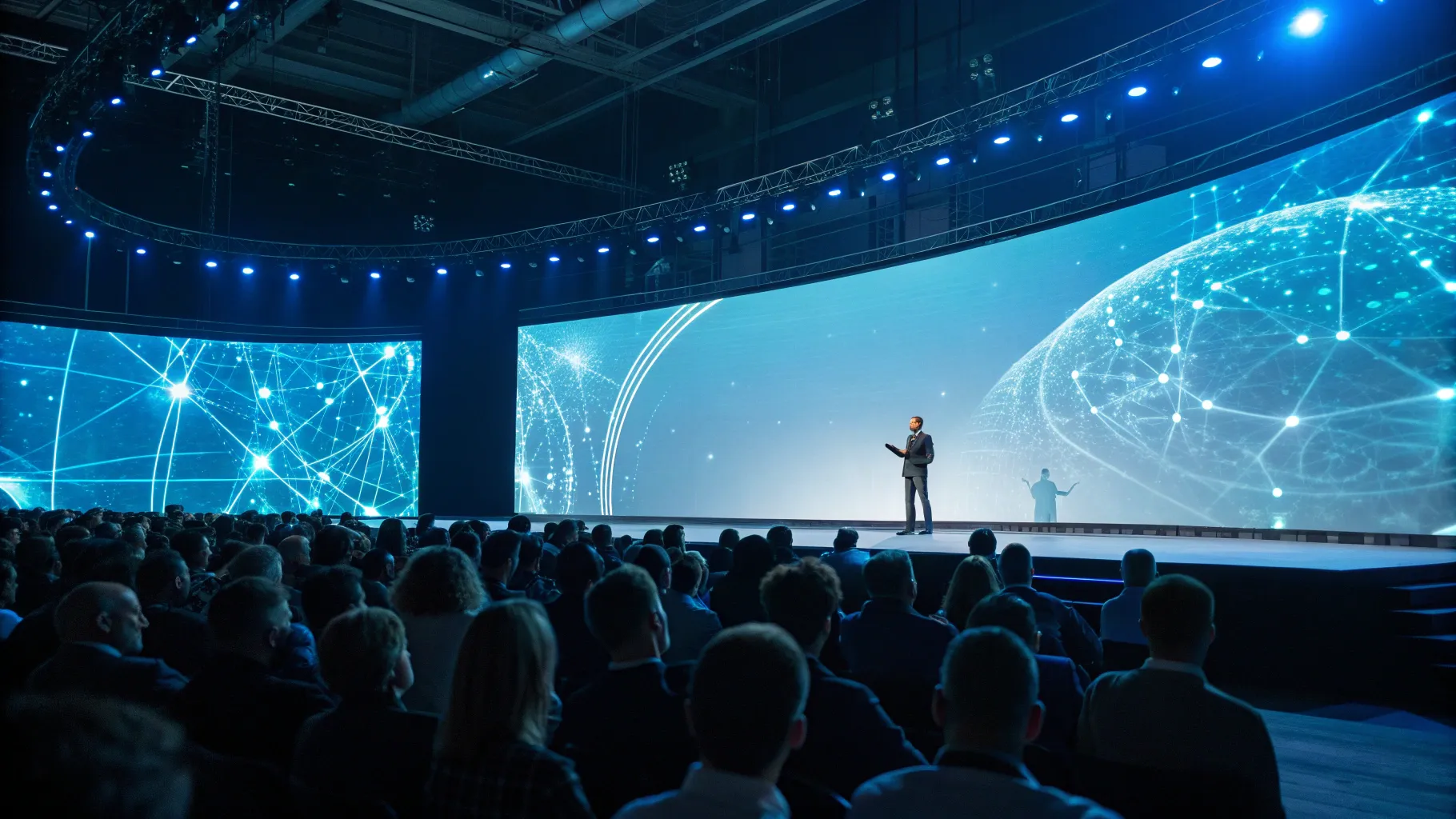
I’m reporting from the lively pregame atmosphere that preceded Jensen Huang’s keynote in Washington, D.C., an event brought to life by NVIDIA’s GTC Live. In a program that blended high-energy banter, serious technical discussion, and a clear celebration of strategic leadership, hosts Brad Gerstner, Patrick Moorhead, and Kristina Partsinevelos guided a conversation that made one thing abundantly clear: the AI era is very much centered around compute, architecture, and the people who refuse to give up.
In this article I’ll walk you through the key moments, unpack the major themes, and provide context for why this pregame show matters to investors, engineers, partners, and anyone tracking the future of artificial intelligence. I’ll quote the most memorable lines, explain their significance, and offer practical takeaways for startups, enterprises, and researchers. My aim is to present a balanced, engaging news-style report that captures the spirit of the original event, highlights NVIDIA’s role, and gives you a clear sense of what’s next.
⚽ Pregame Energy: Hosts, Format, and the Return of a Show
The pregame format felt deliberately familiar—think a high-energy sports broadcast rather than a conventional corporate briefing. Brad Gerstner, Patrick Moorhead, and Kristina Partsinevelos served as hosts, setting a tone equal parts playful and incisive. Right from the start someone joked, “Let’s do a pregame show. Just like NFL football,” and the room responded with the kind of camaraderie you don’t see at most tech keynotes.
I observed two important things about this setup. First, framing a tech keynote like a sports pregame signals a cultural shift: AI and cloud-scale compute are now spectator events with narratives, favorites, and clear leaders. Second, the hosts used humor strategically to humanize an event centered on complex hardware and software topics. The banter—jokes about ordering Denny’s or getting Jensen a napkin—kept the audience engaged and set the scene for candid remarks about strategy, luck, perseverance, and competition.
The hosts also anchored the conversation with distinct perspectives. Brad Gerstner brought a venture and capital lens, Patrick Moorhead added technical and industry analysis, and Kristina Partsinevelos contributed sharp, journalistic questioning. This mix ensured that the session spoke to CEOs, engineers, and investors alike.
Format and flow
- Opening banter to build rapport and set stage.
- Rapid-fire segments mixing jokes, technical insights, and strategic commentary.
- Frequent references to Jensen Huang’s leadership and the broader ecosystem around NVIDIA.
As a reporter and longtime follower of the industry, I found the format effective: it balanced depth and accessibility, and it emphasized a central thesis that recurred throughout the event—NVIDIA has become indispensable to the AI revolution.
🤖 NVIDIA at the Center: Why “There Would Be No AI Revolution Without NVIDIA”
One of the most pointed lines of the session came from a participant who declared, “There would be no AI revolution without NVIDIA.” That statement is bold, but as I examined the evidence presented and the broader industry trends, it’s clear why panelists are comfortable making such claims.
At its core, modern AI—particularly large language models (LLMs) and transformer-based architectures—requires massive parallel compute, high memory bandwidth, and optimized software ecosystems. NVIDIA’s GPUs provide the hardware foundation, but the firm’s influence extends far beyond silicon. NVIDIA has cultivated a comprehensive stack: CUDA, cuDNN, TensorRT, optimized libraries, and partnerships that together enable software developers, researchers, and enterprises to build and scale AI workloads efficiently.
Infrastructure and scale
AI workloads are demanding. Training state-of-the-art models requires clusters of GPUs working in parallel, sophisticated interconnects, and supportive storage and networking topologies. NVIDIA has invested heavily in technologies like NVLink, Mellanox-based networking (acquired through NVIDIA’s purchase of Mellanox), and the software optimizations that unlock performance at scale.
- GPUs optimized for AI computations (matrix multiplications, mixed-precision ops).
- System-level components that reduce communication latency between GPUs.
- Software libraries and toolchains that accelerate developer productivity and model performance.
When people say NVIDIA is central to the AI revolution, they’re referencing this full-stack effect: efficient, high-performance hardware married to a mature software stack and a thriving ecosystem of tools and partners.
Why hardware matters more than ever
We’re past the point where algorithmic improvements alone drive progress. With model sizes blowing up—into tens or hundreds of billions of parameters—the bottleneck increasingly becomes compute. The companies and institutions that can orchestrate the necessary hardware at scale win the race to train and deploy frontier models.
That’s not to say other chip vendors and specialized accelerators won’t compete. But NVIDIA’s advantage is compounded by decades of developer familiarity, robust driver and library support, and widespread adoption in both research and production settings.
🧩 The Open Source Software Stack on NVIDIA Hardware
A recurring theme during the pregame conversation was openness—specifically, how open-source software on top of NVIDIA hardware has democratized AI development. A speaker noted, “The open source software stack on NVIDIA hardware, it's easy for everyone to participate.” That accessibility matters.
From an industry perspective, open source provides three key benefits: rapid iteration, community-driven validation, and lowering the barrier to entry. Developers can experiment with new models, reproduce results, and extend frameworks without being locked into proprietary ecosystems. NVIDIA has been aware of this dynamic and has made strategic moves to ensure its hardware is friendly to open-source frameworks like PyTorch and TensorFlow.
How NVIDIA has bridged the gap
- Maintaining high-quality drivers and libraries that integrate with open frameworks.
- Providing optimized kernels and tools that enhance performance for common open-source workloads.
- Engaging with the community through partnerships, reference implementations, and open contributions.
This approach benefits both sides. Developers get reliable hardware performance without sacrificing the freedom to innovate, and NVIDIA grows a user base that remains committed to its ecosystem. The result is a virtuous cycle: better software drives more use, which drives more hardware adoption, which fuels further software optimization.
Implications for startups and researchers
For startups and academic labs, this open stance means they can prototype and iterate quickly on commodity NVIDIA instances or on-premise clusters without worrying about reinventing low-level tooling. It also means that when a project demonstrates breakthrough results, the community can rapidly reproduce and extend those results—accelerating the pace of discovery across the board.
🧠 Leadership, Tenacity, and Jensen’s Strategic Vision
The pregame show repeatedly circled back to leadership—particularly Jensen Huang’s relentless focus and tenacity. One panelist applauded Jensen for his tenacity, saying, “I mean, he got lucky,” followed by a counterpoint that captured respect: “He just won't lie down and die.” These lines reflect a broader narrative: strategic vision backed by execution differentiates leaders in this market.
Jensen’s public persona is often the focal point of NVIDIA’s narrative. He is frequently credited with anticipating the rise of GPU-accelerated computing, and panelists at the session emphasized that leadership here combines technical foresight with an ability to mobilize an ecosystem.
What leadership looks like in AI infrastructure
- Long-term product roadmaps aligned with anticipated compute needs.
- Investment in both hardware and software layers to ensure integration and performance.
- Partnerships with cloud providers, ISVs, research institutions, and start-ups to broaden adoption.
That mixture—technical foresight, strategic investments, and ecosystem cultivation—explains why many in the room were ready to defend NVIDIA’s centrality to the industry’s progress. I felt the respect in the room; it wasn’t mere admiration for a charismatic CEO, but rather a recognition of how persistent, coordinated action can shift an entire industry.
Tenacity versus luck
The exchange “I mean, he got lucky” followed by “He just won't lie down and die” captures an important nuance: luck helps, but it isn’t a substitute for continual execution. The market rewards companies that can turn favorable moments into sustainable advantage by reinvesting wins into R&D, partnerships, and developer support.
From where I sit, that’s what NVIDIA has done. They capitalized on early momentum, built out the necessary software stack, and stayed relentlessly focused on the areas—interconnects, memory bandwidth, mixed-precision computing—that matter most for large-scale AI.
💼 Venture, Investment, and the Business Case for AI Infrastructure
The pregame show wasn’t just tech talk; it delved into venture-level considerations. Brad Gerstner’s presence signaled that investors are intensely interested in the compute layer. The conversation often returned to the economics of AI: who bankrolls model development, how capital flows to startups building on top of the stack, and what this means for enterprise adoption.
I want to highlight three investment realities that surfaced during the session:
1. Capital intensity of frontier models
Training large models is expensive. Beyond hardware costs, you need specialized engineering talent, optimized tooling, and substantial cloud or on-prem infrastructure. Investors are therefore keen on businesses that either significantly lower the cost of training/inference or provide differentiated applications that justify these costs.
2. Platform plays versus application plays
There was a clear distinction in the dialogue between platform-level investments (hardware, system software, orchestration tooling) and application-level investments (vertical AI solutions, enterprise SaaS). Both are valuable, but their risk and reward profiles differ. Platform plays can scale across many industries but require deep technical moats. Application plays can capture immediate revenue but may face commoditization over time unless they own unique data or workflows.
3. The role of strategic partners
Investors in the room repeatedly pointed out the importance of strategic relationships with cloud providers, hyperscalers, and enterprise customers. For startups building on NVIDIA hardware, having a cloud partner or early enterprise adopter can be the difference between a promising prototype and a company that successfully scales.
Overall, the investment perspective reinforced a simple truth: AI infrastructure is a foundational market with diverse opportunities, but it favors players that can combine technical sophistication with business execution.
🏭 AI in Manufacturing, Security, and Enterprise Infrastructure
Beyond raw compute and investment, the pregame conversation touched on substantive verticals—manufacturing, security, and other enterprise infrastructure areas—where NVIDIA’s stack is enabling transformative work. The hosts lined up examples and commentary that emphasized practical, real-world implications.
Manufacturing: From automation to quality control
Manufacturing benefits from AI through automation, predictive maintenance, and computer vision-powered quality inspection. GPUs accelerate the large models used for image analysis and sensor fusion, enabling manufacturers to deploy real-time monitoring systems. I noted that speakers highlighted robotics and robotics-integrated AI pipelines as a logical next step—these systems need both compute and low-latency inference at the edge.
Security: AI as both a shield and a weapon
Security was another central theme. As organizations adopt AI, they also face novel threats: data poisoning, model theft, and adversarial attacks. Panelists discussed the need for secure infrastructure, model provenance, and monitoring tools that can ensure models behave as expected. GPUs facilitate the heavy cryptographic and analytic workflows required for robust security tooling.
Enterprise infrastructure: Hybrid clouds and orchestration
Finally, enterprise infrastructure is in flux. The conversation acknowledged that enterprises will increasingly operate hybrid stacks: training in large datacenters or cloud environments and deploying inference at edge locations or within private datacenters. NVIDIA’s ecosystem—spanning GPU hardware, cloud partnerships, and orchestration tools—positions it to be a key partner for businesses navigating this hybrid future.
🔑 Key Quotes and Memorable Moments from the Pregame
Several lines from the session stood out for their clarity, humor, or insight. I’ll present the most notable quotes, attribute them where appropriate, and analyze their meaning.
- “Let’s do a pregame show. Just like NFL football.” — Brad Gerstner (opening quip). This set the playful yet competitive tone for the event and framed the keynote as a high-stakes industry moment.
- “There would be no AI revolution without NVIDIA.” — Patrick Moorhead (paraphrased). A stark assertion that underscores NVIDIA’s role in the compute backbone of modern AI.
- “The open source software stack on NVIDIA hardware, it’s easy for everyone to participate.” — Kristina Partsinevelos (paraphrased). This highlights the company’s compatibility with open frameworks—a major growth driver.
- “He just won’t lie down and die.” — Brad Gerstner (colorful praise for Jensen). A statement reflecting admiration for relentless leadership and execution.
- “Help him. Order Denny’s? Get this man a napkin.” — Lighthearted panel humor after an intense exchange, underscoring the human element in tech leadership.
- “AI became the... The objective.” — Jensen Huang (or paraphrase from discussion). This points to how AI is becoming the central strategic objective for organizations across sectors.
Each of these quotes served a purpose: to entertain, to underscore key strategic theses, and to remind us that technology discussions are ultimately about people, not just silicon.
📈 Why This Pregame Matters: Market Signals and Competitive Landscape
Beyond the immediate entertainment value, the pregame show sent clear market signals. I distilled these into several actionable points that matter to industry observers.
The market is consolidating around a few dominant infrastructure stacks
When thought leaders and major customers repeatedly emphasize a single vendor’s importance, capital allocation follows. Startups, cloud providers, and enterprises will continue to optimize for this dominant stack to reduce engineering cost and time-to-market.
Open-source compatibility reduces friction for innovation
NVIDIA’s compatibility with open-source frameworks lowers the barrier for experimentation. That means faster iteration cycles and broader participation from academic labs and startups, which in turn accelerates the overall pace of innovation.
Leadership narrative shapes partner decisions
Leaders matter. Jensen’s persistent focus on product and ecosystem has shaped strategic alliances and helped NVIDIA secure advantageous positions with cloud providers and OEMs. For partners, aligning with market leaders often reduces technical risk.
Cost and scale remain the biggest constraints for new entrants
For potential competitors, the capital and engineering investments required to build a competing ecosystem are immense. It’s not just about designing a chip; it’s about building a software stack, cultivating developer mindshare, and ensuring interoperability with existing tools and standards.
💡 Practical Takeaways for Developers, Startups, and Enterprises
After absorbing the conversation at the pregame show, I walked away with several practical recommendations. Whether you’re a developer, a startup founder, or an enterprise CIO, here’s what I advise based on the session’s insights.
For developers
- Get comfortable with NVIDIA tools: Familiarity with CUDA, cuDNN, and TensorRT remains valuable for high-performance AI work.
- Leverage open-source frameworks: PyTorch and TensorFlow have robust NVIDIA integrations—use them to speed development and reduce friction.
- Experiment on cloud or shared hardware: If you don’t have access to on-prem clusters, cloud-based NVIDIA instances provide an accessible path to scale experiments.
For startups
- Design for portability: Build systems that can run across cloud and on-prem NVIDIA stacks to avoid vendor lock-in and to meet customer deployment needs.
- Focus on differentiation: Whether it’s vertical data, latency optimizations, or user experience—your edge will be unique knowledge or datasets.
- Pursue strategic partnerships: Early alignment with cloud providers or enterprise customers can accelerate adoption and provide crucial feedback loops.
For enterprises
- Plan hybrid architectures: Expect to mix cloud training with edge or private inference deployments—build orchestration and governance accordingly.
- Consider total cost of ownership: Evaluate not just hardware costs, but also tooling, talent, and operational expenses required to run large models.
- Invest in security and model governance: As the pregame highlighted, protecting models, ensuring provenance, and monitoring behavior are essential.
I emphasize these practical steps because the hype around AI must be matched by operational discipline. The conversations at the pregame were a reminder that vision without execution yields little value.
📊 The Technical Underpinnings: Why GPUs Remain the Workhorse
Though the pregame show was heavy on narrative, it also reinforced crucial technical points about why GPUs continue to lead for AI workloads. Let me unpack the main reasons in accessible terms.
Parallelism and throughput
GPUs are designed to handle thousands of parallel operations simultaneously—perfect for the matrix multiplications that underpin neural network training. When you scale training to models with billions of parameters, that parallelism becomes indispensable.
Memory and bandwidth
Large models require high memory capacity per accelerator and high memory bandwidth to feed math units. NVIDIA’s hardware optimizations, both at the GPU architecture level and at the system level (like NVLink), address these needs.
Software optimizations and mixed precision
Mixed-precision training (using lower-precision floating point representations) allows enormous speedups with minimal loss in model quality when supported by hardware and software. NVIDIA’s libraries facilitate these techniques, making it easier for developers to squeeze performance out of existing hardware.
Interconnects and system-level design
Training large models requires low-latency, high-throughput interconnects between GPUs. NVIDIA’s ecosystem includes system designs and interconnect solutions that reduce bottlenecks when many GPUs must exchange gradients and activations during distributed training.
In sum, the technical advantages are multi-layered: not just raw FLOPS, but memory architecture, interconnects, and software optimizations that turn theoretical performance into practical speedups.
🛡️ Security, Trust, and the Ethics of AI Deployment
Security and ethics surfaced as concerns during the pregame discussion. As AI becomes central to business objectives, organizations must grapple with questions around model safety, provenance, misuse, and regulatory compliance.
Model safety and monitoring
Deploying models in production demands robust monitoring to detect drift, bias, and anomalous behavior. Tools that provide transparency into model predictions and audit trails are becoming essential parts of any deployment stack.
Provenance and IP protection
Who owns a model? Where did the training data come from? These questions matter for compliance and intellectual property protection. Infrastructure providers and enterprise customers must ensure data lineage and model provenance are traceable to reduce legal and ethical risk.
Regulatory landscape
Governments and regulators are increasingly attentive to AI’s societal impacts. Companies that proactively adopt governance frameworks and demonstrate responsible deployments will be better positioned once regulations tighten.
The pregame show made it clear that security isn’t an afterthought. It’s part of the infrastructure conversation and a dimension in which vendors and customers will compete for trust.
🔍 The Human Stories: Humor, Rivalry, and Real People Behind the Tech
Amidst the technical detail and strategic analysis, the pregame show reminded us of the human stories that power tech progress. Panelists traded jokes—“Order Denny’s?”—and teasing jabs—“Was that a mistake, or did you think they went out of business? No, I wrote him off.”—that added color to a discussion that could otherwise have been dry.
These human elements matter because they reveal how culture shapes outcomes. Tenacity, humor, and the willingness to take risks can determine whether a company perseveres through tough cycles. When one panelist observed, “Always, you know, challenges work with Amidia. Jensen is very demanding. I gotta be honest,” I heard a recognition that high-performance cultures often come with strong leadership and elevated expectations.
In my reporting, I’ve found that the best tech organizations combine technical excellence with psychological safety and a focus on outcomes. The pregame’s interplay of jest and respect illustrated exactly that dynamic: people work hard, but they also celebrate the small human moments that make a long slog worthwhile.
📣 Final Takeaways: What I’m Watching Next
As I synthesize the pregame conversation, several forward-looking points stand out. These are the trends and indicators I’ll be tracking in the months ahead.
- Platform consolidation vs. specialized innovation: Will the market continue to consolidate around a few dominant stacks, or will specialized accelerators and software carve meaningful niches?
- Open-source momentum: The pace of innovation will continue to accelerate if the community balances openness with reliability and performance.
- Security and governance: As deployments proliferate, we’ll see more sophisticated model auditing and governance frameworks become mainstream.
- Enterprise adoption patterns: Hybrid architectures and edge deployments will become more nuanced—expect more case studies showing how enterprises balance cost, latency, and privacy.
- Talent and tooling: Demand for engineers who can optimize at the intersection of software and hardware will keep growing. Tooling that abstracts complexity while preserving performance will be precious.
In other words, the pregame wasn’t just hype—it reflected a market that’s maturing rapidly. I’ll be monitoring how different players respond to these pressures and where strategic opportunities emerge.
✅ Closing: Why This Pregame Was More Than Entertainment
To close, let me return to the spirit of the event. The pregame show framed technical and business discussions in an accessible way without diluting their substance. It reminded attendees—and me—that leadership, execution, and ecosystem-building are as critical as any single technological innovation.
From the opening quip, “Let’s do a pregame show. Just like NFL football,” to the pointed praise—“There would be no AI revolution without NVIDIA”—the session narrated a sequence of industry truths that matter: compute is the limiting factor for frontier models, open-source enables participation and speed, leadership shapes ecosystems, and the commercial and ethical dimensions of AI cannot be ignored.
As someone who follows this space closely, I left the event energized and pragmatic: energized by the pace of innovation and pragmatic about the work ahead. If you’re building models, investing in AI infrastructure, or leading an enterprise IT transformation, the signals from this pregame matter. They tell you where to invest attention, how to balance short-term experiments with long-term infrastructure planning, and why aligning with robust ecosystems can be a source of durable advantage.
Thank you for reading. I’ll continue to track developments that stem from Jensen’s keynote and the conversations that surround it—and I’ll report back when there’s new evidence that the industry’s narrative is shifting again.


