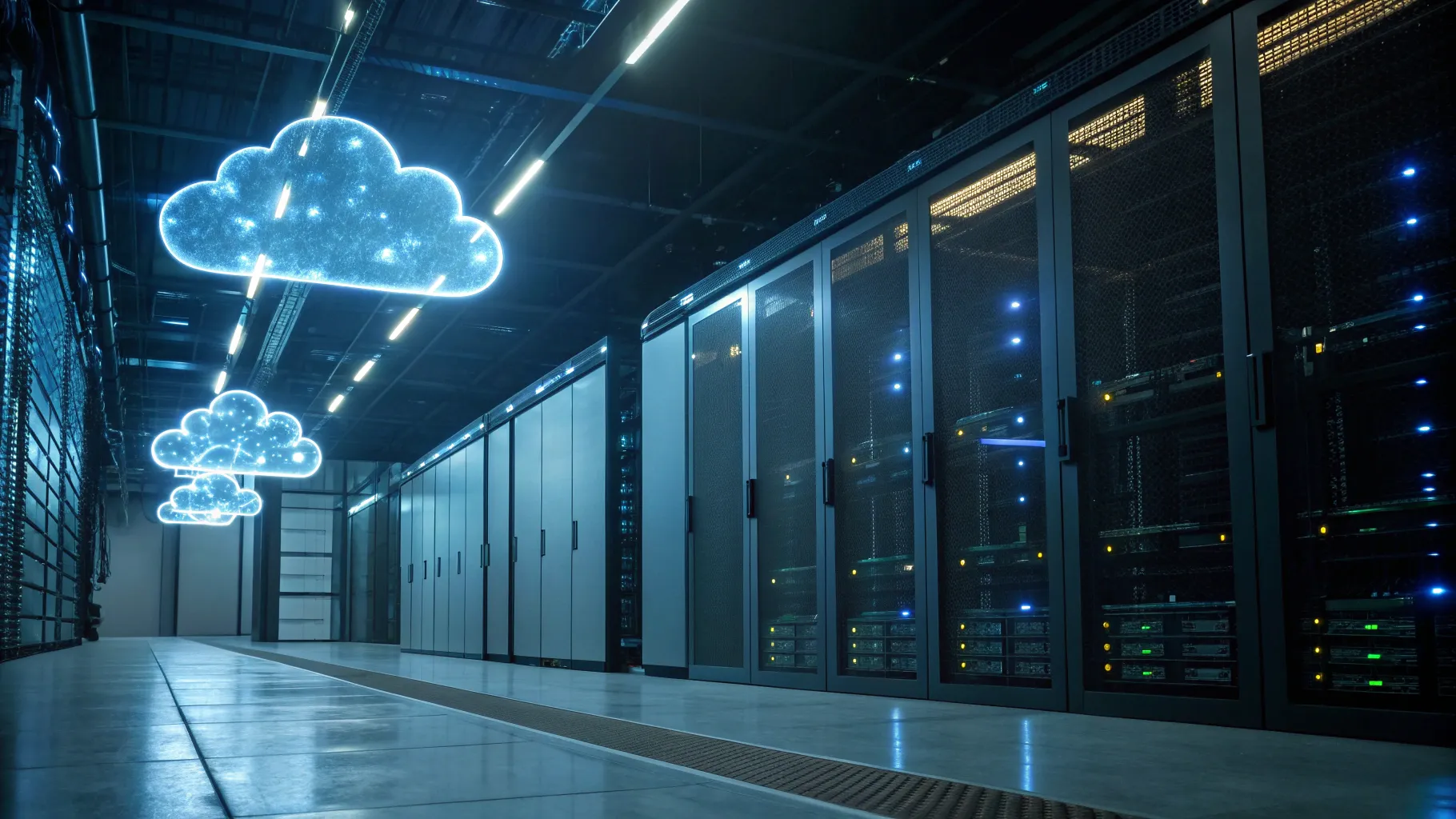
I lead an effort at Northrop Grumman to build and operate an AI factory that serves the full breadth of our company. The goal is simple in concept but complex in execution: provide secure, governed, high-performance AI services that accelerate productivity for nearly 100,000 employees while also enabling mission-critical engineering and manufacturing work that must remain private and, at times, classified.
In highly regulated industries like ours, the choices about where and how AI runs are not purely technical. They are strategic, legal, and operational. To meet those constraints, my team and built a flexible, hybrid approach that balances public cloud capabilities with on-premise and federal cloud deployments. The result is a single, coherent AI factory that supports two distinct classes of capability I call enterprise AI and mission AI.
🧭 What I mean by an AI factory
When I say AI factory, I am describing a standardized, repeatable platform for building, deploying, and operating AI models and services across an organization. It is not a single box or product. It is an engineered capability composed of infrastructure, software, security, governance, toolchains, and operational processes that together make AI consumable at scale.
An AI factory has several defining characteristics:
- Reusable infrastructure: optimized servers, networking, and storage that can host a variety of models and workloads.
- Unified software stack: approved, enterprise-grade AI software that provides model runtimes, management, and lifecycle tools.
- Security and compliance: policies, enclaves, and controls that enforce data protection and regulatory requirements.
- Developer and user workflows: interfaces and pipelines that let engineers, data scientists, and regular employees consume AI safely and effectively.
- Governance and monitoring: operational telemetry, model auditing, and lifecycle governance to manage risk.
That combination turns AI from one-off experiments into a production-ready capability that delivers measurable value. For large, regulated organizations, the AI factory is the way to scale innovation without sacrificing control.
🔎 Why regulated industries need on-premise and hybrid AI
In my work, the question of where AI should run is never binary. There are use cases that are perfectly suited for commercial cloud environments. There are others that must run in federal or classified enclaves. The problem we solve is giving teams access to the right environment for their specific work.
There are a few drivers behind this approach:
- Data sensitivity. Many of our engineering and mission datasets are controlled by regulation or contract and cannot be moved freely to commercial clouds.
- Latency and resilience. Operational systems and live mission assets—satellites being a prime example—require low-latency, highly reliable processing that sometimes must run on premise or in edge environments.
- Security and trust. For systems where adversaries could target AI or the models themselves, having an auditable, private environment is essential.
- Cost and predictability. For sustained heavy workloads, on-premise infrastructure can provide predictable performance and cost compared with bursty cloud billing.
These realities are why I prioritized an architecture that can place workloads where they belong: the commercial cloud when appropriate, federal cloud enclaves for certain controlled workloads, and private, on-premise infrastructure for everything else.
⚙️ Two pillars: enterprise AI and mission AI
In practice, the AI factory supports two complementary categories of usage. I intentionally separate them because their users, constraints, and value propositions differ.
Enterprise AI
Enterprise AI is about boosting productivity and effectiveness across the workforce. That means tools and services that help employees do their jobs faster, with fewer mistakes, and with better information.
When I roll out enterprise AI, I think about:
- Knowledge management and search to find documents and insights across large datasets.
- Assistance tools—summarization, drafting, and structured extraction—that help administrative, engineering, and program teams be more efficient.
- Secure chat and collaboration services that are governed and auditable.
- Automation of routine workflows to free people to focus on higher-value tasks.
Every employee at Northrop Grumman has been trained to use AI responsibly. Training is not optional. People need to understand what the tools can and cannot do, and they need to know how to use them within our policies. The AI factory provides those tools in environments that meet our security posture.
Mission AI
Mission AI is a different animal. This is the AI that directly supports engineering work on products we develop for defense, aerospace, and complex systems. These are the models and workloads that engineers use to design, test, simulate, and refine capabilities that ultimately go into flight hardware, satellites, and other systems.
Mission AI must be:
- Highly secure, often isolated in private or classified environments.
- Capable of handling specialized workloads such as physics simulations, digital twins, and embedded systems testing.
- Accessible to engineering teams for experimentation and rapid iteration without requiring them to build custom infrastructure for each project.
By carving out capacity from the AI factory and making it available to engineering teams, I give them the agility to iterate faster, try new models, and test capabilities that would be prohibitively expensive or slow if each project had to stand up its own full stack.
🔐 On-premise matters: satellites and beyond
One of the most concrete examples I like to use is satellites. When you have a spacecraft in orbit, you cannot go up and plug in a keyboard to fix software. The systems on that hardware need to be reliable by design. They often require models and processing that were developed and tested in secure environments before deployment.
Having the capability to build, validate, and certify AI models on-premise matters for those systems because it gives us end-to-end control. We can verify models against our data, audit their behavior, and then move validated capabilities into the operational pipeline. That level of control is critical in regulated, safety-conscious contexts.
Beyond satellites, any system where external access is restricted—or where the consequences of model failure are costly—benefits from on-premise AI development. The AI factory enables that development while still allowing less sensitive work to live in shared or commercial cloud environments.
🧱 The technology stack I chose
To make the AI factory real, I assembled a layered technology stack built around high-performance compute, robust networking, and enterprise-grade AI software. The stack is designed to be government-ready and to meet our security and operational requirements.
Key components include:
- NVIDIA RTX PRO Servers for GPU-accelerated model training and inference. These servers provide the raw compute to handle both large foundation models and smaller specialized models.
- Spectrum-X Ethernet networking to deliver the low-latency, high-throughput network fabric required for distributed training and scalable inference.
- NVIDIA AI Enterprise software configured for government readiness. This provides a consistent, supported AI runtime environment across our on-premise and federal cloud deployments.
That combination gives me a predictable, supported platform that engineers and data scientists can rely on. The hardware delivers performance. The networking removes bottlenecks. The software offers an approved stack for enterprise and regulated deployments.
📚 Training the workforce
Technology on its own is not enough. People need to be able to use it. When we rolled out the AI factory, we made training a core part of the program. I personally think that democratizing AI within an organization means investing heavily in skills, guidance, and guardrails.
Training involves:
- Helping employees understand how to use generative tools responsibly, including how to verify outputs and manage hallucination risks.
- Teaching data scientists and engineers how to use the factory's pipelines for model development, experimentation, and deployment.
- Providing playbooks for security teams to integrate AI into existing compliance processes.
Training is not a one-time event. It is an ongoing program. AI evolves quickly, and so do the best practices for using it safely. By investing in continuous learning, I ensure that the AI factory remains useful and that teams use it in ways that meet our regulatory and contractual obligations.
🔁 How I balance flexibility and control
One of the hardest parts of building an AI capability in a regulated environment is balancing flexibility for end users with the controls required by the business. Too much control and teams slow down. Too little control and we introduce unacceptable risk.
The approach I used has three parts:
- Environment segmentation. I provide multiple execution environments: public cloud for low-sensitivity work, federal cloud for controlled workloads, and private on-premise or classified enclaves for mission-critical work.
- Policy-driven access. Access to models, data, and compute is governed by role-based policies that align with risk levels. Teams request capabilities through standardized processes and the platform enforces approval flows.
- Audit and telemetry. The AI factory logs usage, model changes, and data flows so that we can audit actions and ensure compliance.
With these controls, I can provide a high degree of agility to engineering teams while still meeting the strict requirements of our contracts and regulations.
🧩 Use cases that show real value
The AI factory supports many practical use cases across the enterprise. Below are a few examples that illustrate how both enterprise and mission AI deliver concrete benefits.
Engineering simulation and digital twins
Engineers use the factory to run large-scale simulations and build digital twins of components and systems. By offloading compute-heavy model training and simulation to the AI factory, teams iterate designs faster and test more configurations than ever before.
That speed translates into better products and shorter development cycles. When a simulation reveals a potential issue, engineers can debug and refine models within days rather than weeks.
Manufacturing optimization
Manufacturing teams use AI to detect defects, optimize assembly processes, and predict maintenance needs. The factory provides the inference capacity and model management tools required to run these workloads in production on the factory floor while keeping proprietary manufacturing data private.
Knowledge discovery and productivity tools
Across the business, employees use AI-driven search and summarization to find the right documents, extract key facts, and prepare reports. These tools reduce time spent searching for information and improve decision-making.
Operational mission support
For operational systems and live missions, the factory is where models are validated and certified before deployment. Whether the target is a satellite or a ground system, having a controlled development and testing environment significantly reduces the risk of deploying unverified models into production.
🛡️ Security, privacy, and compliance considerations
Security is not an afterthought. It is baked into every layer of the AI factory. In my view, organizations operating in regulated sectors must operate under a security-first mindset when deploying AI. Here are the core security controls I prioritized:
- Data residency and classification. We enforce strict controls on where datasets reside and how they are labeled.
- Role-based access and least privilege. Access to models, compute, and data follows the principle of least privilege with role-based enforcement.
- Model provenance and lineage. We track model versions, training datasets, and updates so we can explain why a model behaves a certain way.
- Encryption and hardened enclaves. Sensitive workloads run in hardened environments with encryption at rest and in transit.
- Continuous monitoring and auditing. Telemetry lets us identify anomalous behavior early and perform audits when necessary.
These controls allow regulated work to proceed without compromising the security posture that the business requires.
📈 Measurable benefits and outcomes
When I think about the success of the AI factory, I evaluate both qualitative and quantitative outcomes. The program has delivered benefits across three primary dimensions:
- Productivity. Employees across different functions have shaved hours from routine tasks, enabling them to focus on higher-value work.
- Engineering velocity. Engineering and manufacturing teams iterate faster, run more experiments, and reach validated designs sooner.
- Operational resilience. Mission-critical systems benefit from the controlled development and testing paths we provide, reducing risk in the field.
Those outcomes compound. Faster engineering cycles lead to quicker deployments, which improve operational capability. Improved productivity reduces time-to-decision for program managers and engineers, directly affecting program costs and schedules.
🧭 A practical roadmap for implementing an AI factory
If you are planning a similar capability, here is the pragmatic roadmap I followed. It is designed to be iterative and to deliver value early while keeping risk managed.
- Define clear use cases. Start with a prioritized list of enterprise and mission use cases. Each use case should have measurable success criteria.
- Design the environment strategy. Decide which workloads should run in commercial cloud, federal cloud, or on-premise. Build policies to govern movement between environments.
- Build a standardized stack. Select hardware, networking, and software components that are supported and enterprise-ready. Standardization reduces integration friction.
- Implement governance and security. Build the role-based access, auditing, and compliance controls up front rather than retrofitting them.
- Train users. Provide role-specific training for engineers, data scientists, and business users.
- Deploy incrementally. Roll out core services first—model registry, compute pools, secure enclaves—and then expand based on adoption and feedback.
- Measure and iterate. Track usage, performance, compliance metrics, and business impact. Use those metrics to evolve the platform.
This approach lets organizations deliver early wins while building toward broader enterprise adoption.
⚠️ Common pitfalls and how I avoided them
Building an AI factory is not without pitfalls. I encountered several challenges and learned practical ways to address them.
Overcentralization
Problem: Centralizing everything can create bottlenecks and slow down teams that need agility.
How I avoided it: I designed the platform to be federated. It provides shared services while allowing teams to run isolated workloads when needed. That preserves speed without giving up governance.
Insufficient security integration
Problem: Treating security as an afterthought leads to rework and risk.
How I avoided it: Security requirements guided architecture decisions from the outset. Encryption, role-based access, and audit capabilities were integrated into the platform design.
Lack of measurable ROI
Problem: AI projects can become exploratory without delivering tangible value.
How I avoided it: I insisted each pilot have clear metrics for success and timeboxed experiments to focus on deliverable outcomes. That ensured momentum and leadership buy-in.
Tool sprawl
Problem: Allowing every team to adopt different tools and libraries creates complexity and maintenance costs.
How I avoided it: I standardized on an enterprise-grade software stack, approved libraries, and a set of recommended workflows. Teams could still innovate within those boundaries.
🔭 Looking ahead: how the AI factory evolves
The work does not stop once the AI factory is operational. AI capabilities evolve rapidly, and the factory must continue to adapt. I view the AI factory as a living system that needs continuous investment in the following areas:
- Model lifecycle management. As organizations deploy more models, mature governance and lifecycle processes become critical.
- Federated learning and edge AI. For distributed systems like connected vehicles and satellites, approaches that keep data local while sharing model improvements will become more important.
- Explainability and verification. Improving model explainability and automated verification tools reduces risk and speeds certification.
- Industry collaboration. Working with partners and suppliers to establish interoperable standards for secure AI deployment will increase ecosystem value.
I expect that in the next five years, regulated industries will move from early adoption to standardized practices around AI. The AI factory will shift from being a differentiator to being a necessary piece of enterprise infrastructure—like identity or networking is today.
📌 My closing recommendations
Based on what I have seen and built, here are concrete recommendations for organizations in regulated sectors that want to adopt AI responsibly and effectively:
- Start with the use cases that have clear business or mission impact and build measurable success criteria for each pilot.
- Design for hybrid deployments so teams can put sensitive workloads in secure enclaves while taking advantage of commercial cloud for less-sensitive work.
- Invest in a standardized, supported technology stack to reduce the operational burden and enable scale.
- Make security and compliance first-class citizens in architecture and operations, not afterthoughts.
- Train the workforce continuously so people know how to use AI tools responsibly.
- Measure outcomes and iterate. Use data to refine platform capabilities and governance policies.
"At Northrop Grumman we use our AI factory to enable two different types of AI internally. One is enterprise AI... and the other is mission AI." — Alex Carter
The AI factory is a practical way to deliver both productivity gains and mission-critical advances in a single, governed platform. It is how I reconcile the need for innovation with the strong security and compliance requirements of our industry. By focusing on flexible environments, strong governance, and continuous training, organizations can unlock the power of AI without exposing themselves to unnecessary risk.
🛠️ Quick checklist to get started
If you are ready to begin, here is a compact checklist to move from planning to action:
- Identify top 3 business and top 3 mission use cases.
- Choose a supported hardware and software stack with enterprise and government-ready options.
- Design environment segmentation: public cloud, federal cloud, on-premise enclaves.
- Define role-based access and audit requirements.
- Run 60- to 90-day pilots focused on measurable outcomes.
- Establish training programs for different user roles.
- Formalize governance and lifecycle processes based on pilot learnings.
These steps will help you build momentum while ensuring that the platform you create remains secure, compliant, and useful to the people who depend on it.
🌟 Final thoughts
Building an AI factory in a regulated environment is a commitment to controlled, scalable innovation. It requires discipline, investment, and a clear strategy for where workloads should run and how they should be secured. But the payoff is substantial: faster engineering cycles, more productive employees, and a reliable pathway to deploy trustworthy AI in mission-critical systems.
When I look at what we achieved, the common thread is enabling people. Technology matters, but it is ultimately the workforce—trained, supported, and equipped with the right tools—that turns AI potential into operational and mission outcomes. That is why I continue to invest in the factory: to give our teams the capabilities they need, where they need them, under the controls the world requires.


