📰 Lead: A different view of recruitment
I report today on a facet of Nazi power that is often overshadowed by uniforms, parades and formal decrees. The ascent of Adolf Hitler did not rely solely on military orders or legal instruments. It depended on an intricate social machine that recruited civil leaders through friendship, privilege and everyday complicity. I will show how influence was sold as proximity, how culture and private life became a recruitment ground, and how ordinary people were converted into essential instruments of a criminal regime.
My investigation traces recruitment from architects and filmmakers who sought the Führer his approval to local officials who translated vague intentions into deportations and expropriations. It follows the path from private dinners and stolen porcelain to the administrative forms that signed away lives. The mechanism I describe was deliberate. It made crime habitual, converted luxury into binding evidence, and used family life as a tool of social control.
🎭 Culture as a recruiting ground
When I look into how the Nazi leadership gathered its civil elite, I do not begin in ministries or legislative chambers. I begin in studios, theaters, museums and private screening rooms. Hitler understood early on that imagination and taste were as important as decrees. He tapped into architects, composers, directors and museum curators, not simply to produce propaganda, but to fashion a national aesthetic that would make loyalty visible.
Architects were a particular point of contact. I have seen records and accounts that show Hitler taking a hands on approach to architectural plans. He discussed columns and domes as if they were his own projects. Those who matched his aesthetic obsession and demonstrated a willingness to translate his vague visions into monumental stone found themselves admitted to his inner circle. Technical mastery mattered, but loyalty and alignment with the aesthetic project mattered more.
Cinema operated similarly. A director invited to a private screening at the Führer’s residence could walk out with a multi million contract or with immediate censorship. Decisions did not always pass through ministries. A single approving nod or cold silence could seal a film’s fate. The ability to read gestures and anticipate approval turned artistic practice into ritual. Talent became dangerously fungible: the ability to flatter and the willingness to adjust content to the regime were the qualities rewarded.
Music and festivals were turned into political theatre. The Bayreuth festivals, once a stage for Wagnerian art, became sites where participation signaled membership in the spiritual community the regime claimed as quintessentially German. Musicians played as if every note were a political manifesto. Curators and museum directors, meanwhile, received orders to protect collections. Those orders were in practice confiscations; works moved from private and Jewish collections into state or private holdings kindred to the regime. Those who took possession of these works understood that display of such objects was a statement of belonging.
For many artists the cost was autonomy. Joining the Führer’s cultural circle meant turning art into obedience. In my interviews and archival readings this pattern emerges repeatedly. Fame and commissions were offered as bait. Autonomy was the sacrificed thing. For those who accepted, the reward was visibility, contracts and a place in the aesthetic remaking of the nation. For those who refused, personal and professional ruin awaited.
How culture blurred the line between reward and crime
- Private screenings and dinners replaced formal approvals. A gesture became law.
- Confiscated art was redistributed as reward, making the possession of looted goods a ticket into the elite.
- Aesthetic alignment trumped technical skill: you rose by echoing the Führer, not by innovating.
🏔️ Berghof and Obersalzberg: proximity as political currency
Power crystallizes physically. In the case of Hitler it took a geographic form at Berghof and the surrounding Obersalzberg. What began as a mountain retreat transformed into a private court where the degree of physical closeness to the Führer equaled political influence. I have studied the topography of that area and the ways in which living a few minutes walk from Hitler could define careers.
Obersalzberg was a carved out enclave. Local farmers were expelled or bought out under pressure. Jewish families were dispossessed. In their place rose villas, chalets and residences for ministers and high officials. The physical arrangement of the houses, the roads and the private paths created a social hierarchy measured in metres. Who lived closest enjoyed almost ceremonial benefits: the chance to be invited for unpredictable strolls, to participate in informal talks, to appear in candid photographs with the Führer.
Martin Bormann was the man orchestrating much of this transformation. He managed expropriations and allocated permits. His role gave him a strange urban planning power over the private lives of Nazi elites. Want a parcel near Hitler? You had to go through him. The effect was profound: Bormann became not only an administrator but a gatekeeper. If you wanted access, you needed his favor.
Residences themselves were political statements. Hermann Göring built excessive lodges lavish with trophies and confiscated art; his ostentation itself became a political liability because it offended Hitler’s cultivated image of somber rural simplicity. Joseph Goebbels, on the other hand, chose a more restrained house and used it as a stage for cultural evenings and screenings, hoping to present himself as a man of letters and to win favor through cultivated intimacy rather than spectacle. Albert Speer, Hitler’s architect, built a modern villa whose language of form served as a quiet manifesto of aesthetic sympathy with the Führer. Each building broadcast a message of loyalty and belonging.
This terrain was also a theatre for wives and families. Social life in Obersalzberg was intricately domestic: teas, garden strolls and dinner parties. These events had consequences. A hostess who could lure Eva Braun or who could organize a spotless dinner acquired influence for her husband. Dishes, silverware and tapestries taken from confiscated homes were displayed as trophies and symbols of status. I have read many testimonies describing how a single social triumph could advance a career just as surely as an appointment letter.
Why proximity mattered more than title
- Informal access allowed spontaneous interactions and favors not available in Berlin offices.
- Social rituals created a hierarchy based on physical presence and visibility with Hitler.
- Gifts and possessions displayed in those houses served as proof of political trust.
🔍 Intrigues at the alpine court
If Obersalzberg functioned as the court of a monarch, then the lives within it were shaped by rivalry, suspicion and calculated gestures. I have found that the interactions among high ranking figures were rarely direct confrontations. The battles were ritualised, conducted through hospitality, placement of houses and carefully choreographed social acts.
Göring’s sumptuous lodge was meant to underline his stature. His display of hunting trophies, tapestries and looted art became a point of attack for rivals who argued that such ostentation contradicted the image of the movement. Goebbels used subtlety and cultural hostings to gather influence. Speer spoke through form and order, offering architectural language that resonated with Hitler’s personal aesthetic. Bormann, meanwhile, exercised the blunt instrument of administrative control by manipulating access and plotting the topographic layout of favor.
These tensions played out across shared activities: who invited whom to the Kehlsteinhaus, who was present at a hunting party, who breakfasted with the Führer. The social calendar determined careers. Invitations took on the value of promotions. Exclusion became a weapon. A delayed invitation could be as damning as a leaked allegation. Bormann’s control over visits and his ability to filter who could approach the Führer endowed him with a power that outstripped many formal offices.
Wives were not idle observers. They were combatants in a social war. The battle for Eva Braun’s friendship could elevate a husband. Magda Goebbels and Emmy Göring engaged in rivalry that extended from salon etiquette to political influence. Domestic missteps had real consequences for officeholders; a poorly served dinner or even an inadvertent omission was interpreted as sloppiness or lack of loyalty. People did not simply cultivate political allegiances; they curated domestic impressions to safeguard careers.
Rituals and repercussions
- Holidays and leisure events were arenas for invisible promotions.
- Social snubs translated into bureaucratic penalties and professional sidelining.
- Bormann, by controlling entry to the mountain, shaped the balance of power more effectively than many ministries.
📋 Recruiting the mediocre: why the unremarkable rose
A striking feature of the civil hierarchy I have examined is the regime’s preference for the mediocre. Hitler did not recruit the boldest or most brilliant. He selected those who would never overshadow him. My reporting points to a systematic elevation of men who were functional, pliable and devout in their obedience.
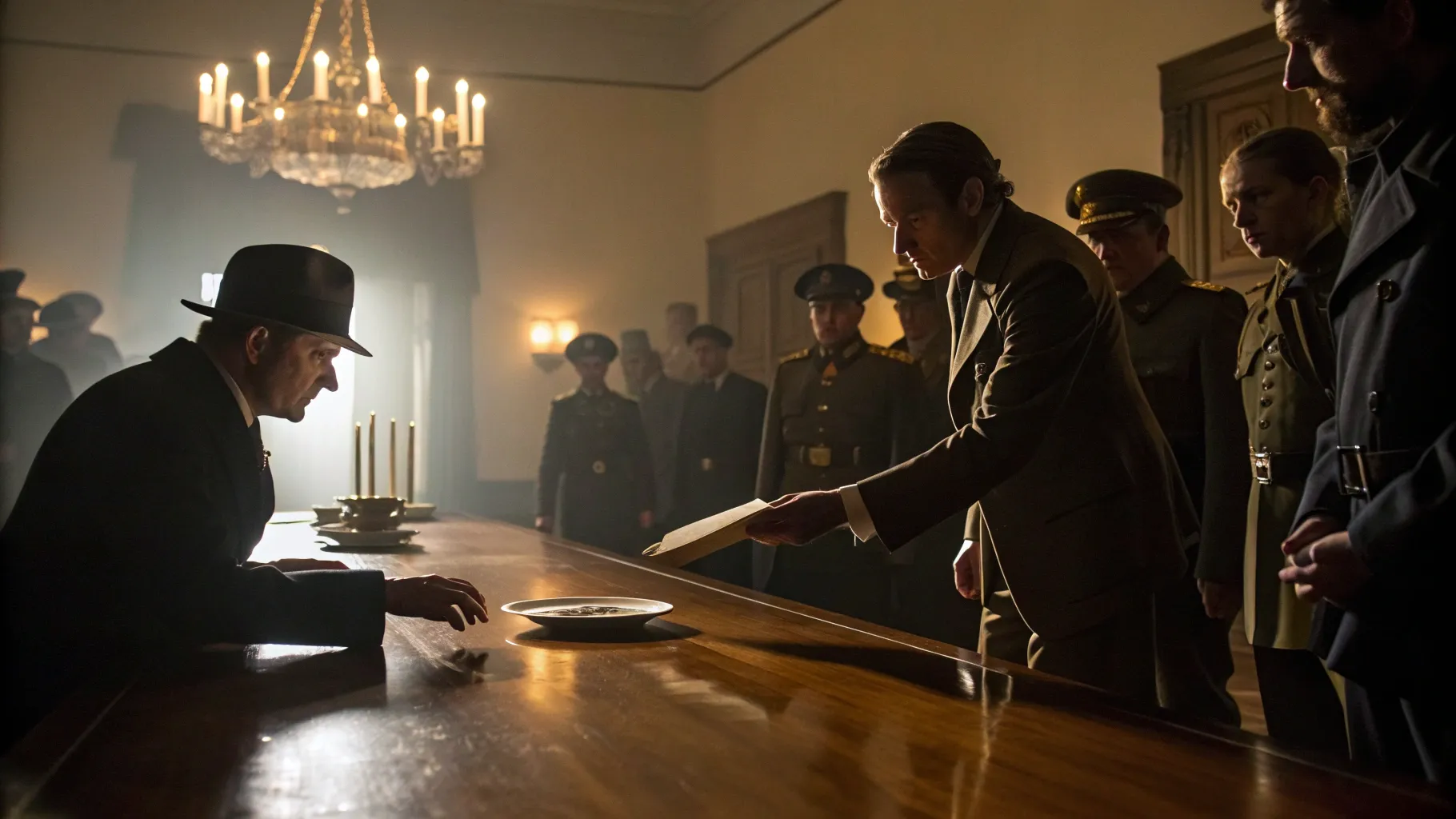
The selection process was intimate. I have read accounts of interviews at long tables where silence was weaponised and theatrical lighting was used to unsettle candidates. In these meetings not technical skill was tested, but demeanor. Confidence could be dangerous. Those who spoke too confidently were dismissed; those who fumbled, sweated or avoided eye contact were considered moldable and were often promoted. The logic was simple: a brilliant subordinate could become an alternative center of influence. A mediocre administrator bound to Hitler by gratitude, fear and habit would not.
The result was an administration populated by grey men. These officials often lacked distinguished credentials. Their diplomas were average, their biographies undistinguished. But that very ordinariness became their qualification. They excelled at ritual submission: writing flamboyant memos praising Hitler’s vague utterances, crafting elaborate ceremonials that mirrored party slogans, and pronouncing overblown adjectives in official reports. I have seen memos where the virtue expressed matters less than the language of adulation.
This drive to reward servility led to a bureaucracy where initiative meant competing to outdo one another in fervor. Projects were often less about problem solving and more about demonstrating zeal. When Hitler mentioned an idea in passing, entire institutional resources could be diverted to producing documents and regulations that proved fidelity rather than efficiency. The more absurd and hyperbolic the response, the more likely it was to be rewarded.
Consequences of promoting mediocrity
- Innovation and critical thinking were sidelined in favour of performative loyalty.
- Administrative energy funnelled into signaling rather than governance.
- Officials became dependent upon the leader, creating layers of institutional fragility.
👩👩👦 Wives and families as instruments of recruitment
Power is not sustained solely through offices. It seeps into private kitchens and living rooms. In my research I found that the Nazi recruitment apparatus deliberately entwined family life with political loyalty. A new official was not fully recruited until his household accepted the role. Wives were encouraged or expected to perform ceremonies of allegiance, to display looted goods, and to participate in the social circuits that signified belonging.
Hiring into the elite meant instantaneous changes in domestic life. A family could be resettled into a confiscated house. Furniture, tapestries and porcelain taken from expelled families would furnish the dining room. Wearing looted jewelry and serving on stolen porcelain became a public show of status. Hostesses competed to display the most precious spoils. These displays were not merely vanity. They operated as public evidence of favor. Guests recognized the message immediately and adjusted their alliances accordingly.
Child rearing was shaped into propaganda. Mothers who bore multiple children and displayed them as exemplars of racial purity were celebrated. Medals and ceremonies honoured motherhood as a civic virtue. Children, dressed in youth uniforms and performing patriotic songs at ceremonies, became living symbols of future loyalty and of a regime that could guarantee familial prosperity. I have looked at printed newspapers of the period that circulated images of smiling families; these were not merely propaganda objects. They were deployed to normalize the regime and to bind households to its mission.
Domestic life thus served as a site of social policing. Wives monitored friendships, discouraged "suspicious" acquaintances, and ensured the household practiced party orthodoxy. Those who resisted social demands found their partners’ careers at risk. The domestic sphere, in short, was not free. It was a vital instrument for reinforcing loyalty and ensuring continuity.
Domestic levers of control
- Display of confiscated goods as proof of belonging.
- Social competition among wives to secure access to inner circles.
- Children used as props of legitimacy and as tools for generational recruitment.
☕ Informal social circles: where decisions were quietly made
The engine that powered recruitment was not only ceremonial. It was social. Cafes, taverns, private salons and weekend retreats forged bonds that then translated into political trust. I have traced how many of the ties that later carried men into ministry jobs and party positions began in smoke filled rooms over beer and sausages or in the conspiratorial cheer of early gatherings.
Those early bonds were cemented not by formal credentials but by shared experience. Men who had been comrades in the taverns of Munich remembered arrests, prison cells and collective risk. Shared memory created loyalty that later evolved into a kind of currency. When the opportunity for appointments arose, those memories acted as a recommendatory shorthand: we were with you then, and we will stand by you now.
As the regime matured, these social settings became more sophisticated. The Berghof, with its terraces and informal tea times, provided a setting where intimacy replaced ritual. Here gossip and small talk could determine promotion. A witty anecdote at the right time could attract the Führer’s attention. Theaters of social life operated like closed recruitment fairs. Attendance signaled belonging. Absence could mark an individual as suspect.
This system was deliberately diffuse. It allowed the regime to operate beyond written records, beyond committees and beyond public transparency. Friends vouching for friends created a web of mutual obligation that no statute could capture. Private sociality allowed a mode of power that required no official mandate: gestures, smiles and seating arrangements did the work of selection.
Informal venues that mattered
- Bavarian beer halls as memory anchors for loyalty.
- Private salons and receptions as selection arenas.
- Leisure activities as testing grounds for social comportment.
🔥 Ideology as a trial by fire
At the center of recruitment was ideology. Not just public adherence to slogans but an internalized, performative fanaticism. I have concluded that the regime used ideology as a litmus test. Candidates did not merely profess belief; they were expected to live in accordance with the doctrine. Gesture, speech and action all served as evidence.
Hitler mastered a method of making his pronouncements intentionally elliptical and inflammatory. In private encampments he would make sweeping declarations about Jews, Bolsheviks or internal enemies and watch how his guests reacted. Silence was dangerous. Hesitation signaled either doubt or independence. Those who responded with louder claims or who immediately proposed extreme measures signaled their utility.
In institutions the logic was replicated. University professors rewrote classrooms to include racial doctrines. Businessmen anticipated racial policies by dismissing Jewish workers before laws required it. Bureaucrats drafted harsher regulations to prove their zeal. I have seen documents that were written not in pursuit of technical problem solving but to provide evidence of ideological fidelity.
Antisemitism was the hardest test. Participation in confiscations, in the management of deportations, in the expropriation of property was a clear demonstration of commitment. Those who refused such tasks were quickly deemed unreliable. The regime rewarded those who converted hatred into administrative practice. Such implementation offered a ticket into the inner circles and, crucially, bound recipients to the crimes themselves.
Forms of ideological testing
- Private declarations and spontaneous escalation during informal gatherings.
- Academic conformity through revised curricula and research priorities.
- Economic collaboration by enforcing early dismissals and participating in expropriation.
💰 Crime normalized: looting, forced labor and shared guilt
One of the most chilling aspects I have documented is how easily illegal acts became everyday routines. The process was not accidental. It was structural. By making theft, confiscation and exploitation part of the reward system, the regime bound participants through complicity.
Administrative forms disguised violence. Paperwork ordering expropriation concealed the human cost. I have examined files where a dry bureaucratic tone describes the seizure of homes and businesses. But behind each row of signatures were families evicted, livelihoods destroyed and histories erased. Signing such papers implicated the signatory in the crime.
Looted art and furniture provided a visual proof of partnership. When a minister or a bureaucrat hung a Renaissance painting on his wall, the legal status of that painting suddenly mattered less than its role as evidence of favor. The possession of stolen goods created a psychological trap: returning them would be to admit participation in a crime. The reward thus turned into a chain.
Forced labor became similarly institutionalized. Industry accepted slave labor. Prisoners from concentration camps were used in factories and workshops. Those who benefited economically from this arrangement became locked into it. Profit made exit impossible. I have seen corporate memos celebrating increased production that mentioned nothing of the human cost. This omission was not ignorance. It was a practical condition of being part of the system.
Language changed too. "Aryanization" or "resettlement" replaced theft and deportation. Bureaucratic vocabulary made brutality sound technical. After months of using such terms every official came to regard these operations as standard policy rather than crimes. The linguistic sleight of hand helped normalize wrongdoing.
Mechanisms of normalization
- Bureaucratic paperwork that masked violence behind formal procedures.
- Redistribution of looted property as reward and evidence of inclusion.
- Integration of forced labor into industrial production and profit systems.
✍️ Indirect obedience: working for the Führer
A concept often described by historians and evident in my research is the idea of indirect obedience. The leader would provide broad, sometimes vague directions, leaving subordinates to interpret them. This method outsourced radicalization. The result was a system where initiative meant anticipating the Führer’s wishes and acting in his name.
This pattern produced a perverse incentive structure. The official who acted first and most decisively in line with Hitler’s rhetoric was the one rewarded. That set off a competitive spiral. Lower level functionaries began preempting one another with increasingly severe measures. Local governors ordered expropriations, deportations and executions without waiting for Berlin. They knew that decisive action could be presented later as evidence of loyalty.
The interpretative competition worked horizontally and vertically. Municipal secretaries, departmental heads and industry executives competed to show they understood "the Führer’s spirit" better than their colleagues. The cumulative effect was a decentralized radicalization. I found examples where local actions, once standardized, were then used as models to be copied by other regions. Top down authority thus became supplemented, and in many cases replaced, by bottom up zeal.
This pattern is important to understand. It means that the system did not always need explicit orders to commit atrocities. It relied on the expectation that subordinates would act in accordance with the leader’s general rhetoric. In that vacuum the most radical proposals prospered because they demonstrated the greatest fidelity.
The dynamic of initiative
- Vague central directives rewarded decisive local action.
- Competition to interpret the leader’s will drove escalation.
- Decentralized radical measures became normalized across administrative levels.
🚗 Material rewards and status: the visible price of loyalty
Ideology and social signalling did much of the recruiting work. But I must emphasize the power of material enticements. Houses, cars, artwork and social privileges were not just perks. They were instruments of control. When a person accepted them they also accepted the consequences.
Property confiscated from dispossessed families was redistributed. A modest civil servant could suddenly inhabit a villa. Such shifts in living standards were experienced by entire households. Wives updated wardrobes with looted dresses. Children received access to elite schools. Employment for relatives became possible. These rewards were tangible, immediate and convincing.
Owning a state car with a driver was one of the most visible symbols of inclusion. Driving that Mercedes through the city was a public performance of belonging. Those signs were displayed publicly and were reinforced in press coverage. Media exposure validated status and cemented reputations. Officials whose faces appeared in Reich newspapers as honoured guests gained social capital they would not otherwise have achieved.
Reward systems were constructed to be self binding. Accepting privileges made later denial difficult because it would also imply a confession. Consequently many who had entered the system to gain social ascendance found themselves trapped. The more they kept, the more compromised they became. Here again the regime’s logic was effective: reward was both carrot and handcuff.
Types of material rewards
- Confiscated real estate and its public signaling effect.
- Redistributed art and household goods serving as visible trophies.
- Access to private events, attendance privileges and media recognition.
⚰️ Collapse and accountability: what happened when power failed
The unraveling of the regime exposed the fragility of a power structure built on social favors and stolen wealth. As Allied bombs fell and the Obersalzberg residences burned, what had been trophies became liabilities. The same objects that had legitimized status now served as evidence of complicity.
The final years saw frantic looting as officials attempted to salvage goods. Cars, paintings and personal documents were moved in hurried convoys. Some managed to flee and to later reemerge in business, law or teaching. Others faced prosecution at Nuremberg and in smaller tribunals where their administrative paperwork and private photographs were used against them. I have studied records from trials that rely on exactly the kinds of evidence created during the preceding decades: lists, inventory records and society photographs.
Yet escape was possible for many. The bureaucracy's anonymity helped some functionaries disappear into postwar life and reconstruct new identities. The middle ranking officials who had once been prized for their mediocrity could, in a different era, again be ordinary citizens. For others, the stain of participation lasted for decades. Families found themselves publicly judged by the looted objects that remained in attics or on walls. The ruins of Berghof became a testimony to the moral collapse of a social order that had been built on theft and obedience.
Trials made clear that administrative language and chaotic social intimacy had not been innocent. They were mechanisms that facilitated crimes. Paperwork, private parties and expropriations were not isolated acts. They were linked in a system that relied on the complicity of many strata of society.
Consequences after collapse
- Public and legal exposure of complicity through archived documents and images.
- Ruins and returned property as symbolic restitution and as evidence of crime.
- Survivors, prosecutors and historians using the record to reconstruct networks of responsibility.
⚖️ Conclusion: what this recruitment model teaches us
As a reporter I have followed the trail from private dining rooms and mountain hotels to the cold bureaucratic spaces where deportations were authorized. I have documented how recruitment to the Nazi civil high command was less a matter of formal decree and more a deliberate social engineering. It combined cultural conquest, domestic manipulation, material enticements and the deliberate normalization of criminal acts.
The method had three core pillars: first, social proximity—to be physically and socially close to the leader; second, ideological performativity—to show that you were ready to move from words to action; third, material integration—to accept spoils that made disassociation impossible. Together these pillars produced a self sustaining machine. It recruited men and women who were willing or forced to transform routine administration into complicity.
We should take away a few lessons. Systems that reward moral compromise with material gain create durable commitments. Places where private life and political privilege fuse will produce loyalties that are hard to dissolve. Finally, the decentralization of violence under the guise of initiative can accelerate radicalization faster than top down commands. I have observed that ordinary ambitions and social vanity can be converted into extraordinary culpability when power is carefully designed to exploit them.
"Proximity became currency. Privilege became proof. Crime became habit." These are not slogans but descriptions of how a modern state can recruit an elite without proclamations or a signing ceremony.
Beyond the historical record, this story warns us about the mechanics of power. When private favors pass into public office and when social circles decide who will govern, democracies and institutions must be vigilant. Transparency, accountability and the separation of private enrichment from public service are not merely ideals. They are guards against a system that turns friendship into favoritism and privilege into a chain.
My reporting aims to make visible what is sometimes invisible: the quiet social processes by which responsibility is blurred and where many hands, through gestures and gifts, become complicit in great crimes. Remembering these dynamics is a part of preventing their recurrence.
Key takeaways
- Recruitment went beyond formal appointments to include cultural and social integration.
- Proximity to the leader, especially at places like Berghof, translated into real political power.
- Ordinary people were enlisted through domestic rewards and social validation.
- Ideology and antisemitic actions functioned as tests that identified the most useful collaborators.
- Material spoils became binding evidence of complicity and made exit from the system difficult.
- The decentralized "work towards the Führer" turned vague rhetoric into brutal policies through local initiative.
I will continue to examine the archives and interview survivors and witnesses so that this complex social history is neither forgotten nor simplified. The lessons remain urgent: power can be consolidated in whispers and favors as effectively as in laws and decrees. Public vigilance is the first defense against a system that trades liberty for luxury and turns ordinary ambition into shared guilt.


