Table of Contents
- On the Ground in Vancouver 🎬
- Cast of Characters and Creative Angles 🎭
- Scale, Direction, and Creative Trust 🚀
- How Design Tools Show Up On Set 🖥️
- Stunts, Practical Effects, and the Little Things That Matter 🎥
- What It Looks Like When Imagination Is the Brief ✨
- Behind-the-Scenes Culture: Collaboration Over Hero Work 🤝
- Practical Takeaways for Creators and Brands 🛠️
- How This Shapes a Brand Campaign Strategy 📈
- Quotes That Stuck With Me 🗣️
- Lessons for Small Teams and Solo Creators 💡
- Creative Direction: Finding the Right Tone 🎨
- Measuring Success Beyond Views 📊
- Production Notes Worth Stealing 📝
- Why This Work Matters for Creative Culture 🌍
- Final Frame: A Short Dispatch From the Set 🗞️
- FAQ 🤔
- Further resources & next steps
On the Ground in Vancouver 🎬
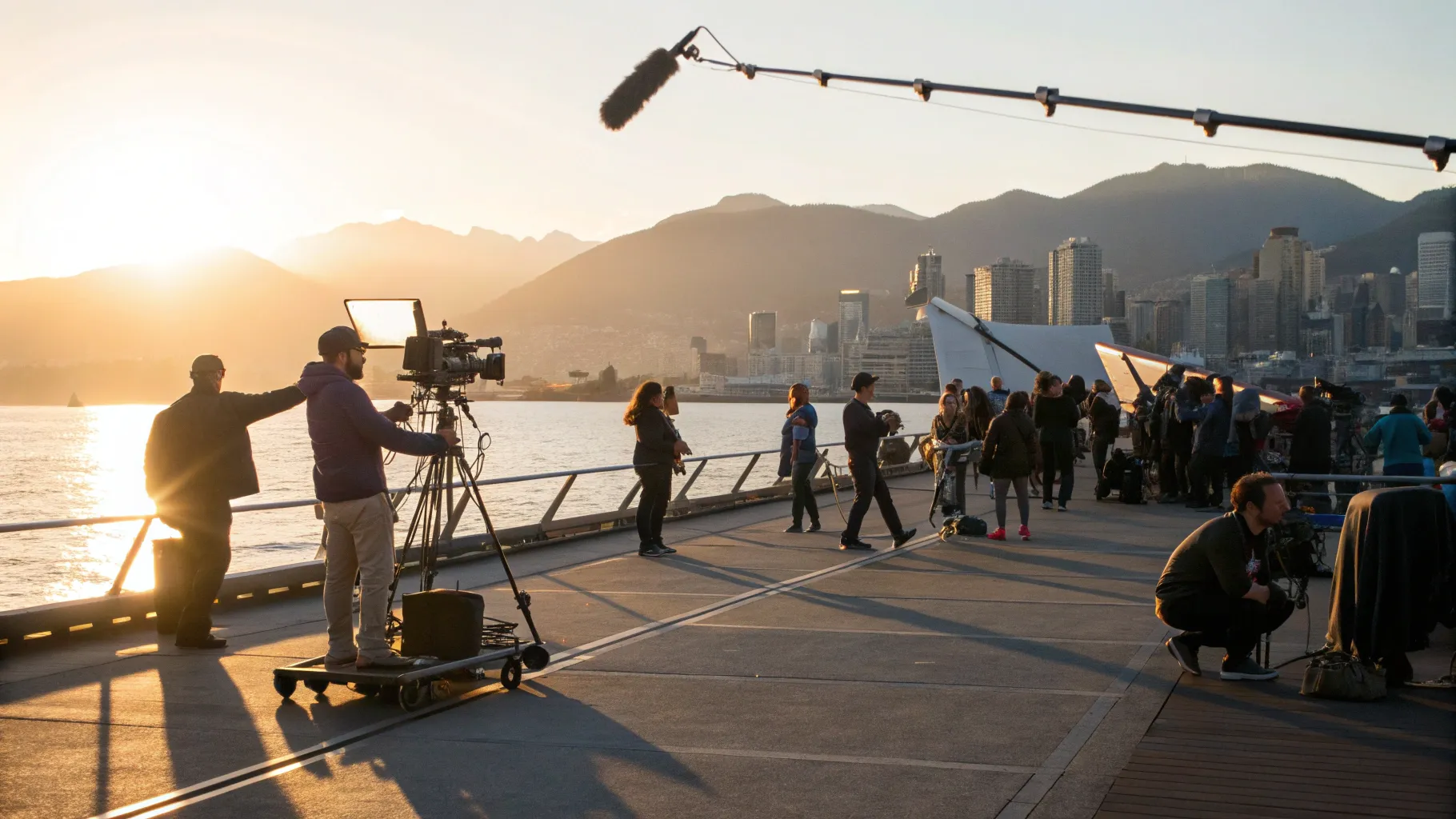
I was on set in Vancouver for four days of tightly choreographed chaos, and the headline would read: imagination is a production asset. Big-name directors, a production team that moved like a Swiss watch, and actors who flipped whole identities in minutes turned concept pages into something that will run on TV. The campaign’s goal was simple and loud — show people that whatever they imagine, they can create in Canva — and the way we built that message felt like a small theatrical revolution.
What surprised me was how quickly ideas became tangible. One moment we were in a doc writing scripts and sketching boards, the next moment we were halfway around the world putting those scripts in front of cameras. I kept thinking of one line that summed it up: “we wrote some scripts, some ideas in a doc, and then a month later, we're around the other side of the world, making those words come to life.” It’s an understatement and also the headline of how creative work should flow when trust and craft meet.
Cast of Characters and Creative Angles 🎭
We built three worlds, each designed to show a different way imagination can be put to work. The cast brought razor-sharp focus to each role.
Barb — the Realtor Who Becomes Battle-Ready
Barb was a delight. She starts as a realtor grinding through a tough market and ends up slaying her competition with design. The visual was playful and slightly mythic: a throne made out of real estate signs, a warrior-ready Barb who conquers listing decks and open houses with better design and storytelling. It’s easy to laugh at the metaphor, but it lands because it’s grounded in a real truth — when a professional uses strong visuals and clear messages, results follow.
We literally designed signs in Canva for the shoot. That tangible moment — holding a real sign that began as a digital template two hours earlier — is the kind of proof that helps a story breathe. Barb’s transformation wasn’t mystical, it was practical. The point was clear: better design tools make professionals more effective.
Bob — the Ice Cream Guy Who Turns Vampire Entrepreneur
Bob was one of my favorite arcs to watch unfold. He starts as an ice cream shop owner and, through playful imagination, becomes a vampire entrepreneur. Yes, fangs, makeup and all. At one point someone on set said, “I’m going to be putting on some fangs and some makeup and I’m going to become a vampire and shoot an insane commercial.” That line captured the tone: ridiculous in the best way because it’s rooted in a truth about reinvention.
The set design leaned into camp and charm. I loved the little production wins like the practical stunt work — Bob’s tumble that we had to rehearse carefully — and the way props were created quickly in Canva to look authentic. The scene worked because Bob’s transformation represented small-business reinvention: flip identity, reimagine the offer, present a new story to customers.
Wendy — HR Middle Management as Spell-Casting Enchantress
Wendy’s part is the one-liner that gets you smiling: HR people are often stuck in process, but give them the tools and they become enchantresses who streamline operations and charm stakeholders. We filmed Wendy as an HR witch who literally casts spells to make paperwork disappear and culture stickier. There’s even a stunt — a fall that required practice — and the physicality added a comic urgency to an otherwise dry subject.
The idea here was to convert a corporate pain point into a moment of delight. I watched wardrobe, makeup, and prop teams riff on HR iconography — clipboards turned into spell books, policy templates into scrolls. It’s creative problem solving that feels like an in-joke for people who work in offices and a clear signal to managers: creativity applies in every department.
Scale, Direction, and Creative Trust 🚀
Four days can sound short for a big campaign, but it’s amazing what a tight team can do when everyone is aligned. The directors — two Scandinavians with a knack for high-concept visual humor — brought a consistent style to the set. Most importantly, the production team trusted the creatives and the creatives trusted the team. That trust showed up in small ways and big ways.
Small ways: wardrobe changes that happened in minutes, sign templates turned into physical props within the day, and actors shifting tone without a dozen retakes. Big ways: when the producers said “we trust your instincts,” teams took risks. I watched set designers spin leftover materials into a throne of real estate signs. That kind of resourcefulness only happens when people are empowered.
Trust is also why we saw surprising creative flourishes. A line like “there’s your beast” or a simple “Slay!” becomes a delivery punch because everyone on the crew knew the joke and committed to it. That commitment turns a concept into a broadcast moment.
How Design Tools Show Up On Set 🖥️
Part of the production’s charm came from using Canva as a practical tool, not just a prop. Presentations, signage, video assets, and documents were created in the app and shipped to set as believable artifacts. The speed of making something look real is a form of reality-building in production.
When I say “we designed signs in Canva,” I mean it literally. The creative team mocked up branded real estate signs, menus, posters, and even “policy scrolls” in real time. The production then printed and fabricated those designs into props. That loop — concept to digital design to physical prop — tightened the story and made the characters’ worlds feel authentic.
There’s an important lesson there for anyone producing creative content. The faster you can iterate between idea and tangible object, the more freedom you have to experiment. That frees the director to try variations on a moment and the actor to play with a prop that actually exists.
Stunts, Practical Effects, and the Little Things That Matter 🎥
Commercials often rely on small theatrical moments that land big. We had a few of them: tumbling stunts, quick costume flips, and comedic beats that required timing rather than spectacle. The stunt where Wendy tumbles had to be rehearsed. Bob’s vampire leap needed the perfect bite of expression. Barb’s throne shot was a one-take moment that needed the right lighting and the right posture.
Those moments are where crew craft upstages flashy tech. Lighting rigs set the mood in seconds. A carefully aimed practical effect can sell a transformation in a frame. I was reminded that production design and timing are the unsung heroes of any successful spot.
What It Looks Like When Imagination Is the Brief ✨
When a brief is to demonstrate "put imagination to work," the job becomes translating an abstract promise into real human experiences. Each character in the campaign embodies a promise. Barb shows tangible professional uplift. Bob shows creative reinvention. Wendy shows operational transformation. Together they make a clear point: imagination is not fluff. It’s a tool.
On set, that translated into practical creative decisions:
- Design artifacts that feel used: templates that look like work-in-progress instead of polished studio samples.
- Props that tell stories: a throne made of signs, clipboards that double as spell books, an ice cream cart with a vampire twist.
- Performances rooted in truth: the actors played professionals who had a moment of levity, not caricatures.
Behind-the-Scenes Culture: Collaboration Over Hero Work 🤝
The production was an exercise in collaborative humility. Directors, designers, prop makers, and actors all brought something and then gave up ego to make the final product better. I saw producers empower creative teams and creatives trust technical teams. That culture of giving space is a production secret.
There was an unspoken rule on set: if you’re not solving a problem for the scene, you’re creating one. Everyone stayed focused on the core job — tell the story and make the message believable. That discipline kept the shoot efficient and joyful.
Practical Takeaways for Creators and Brands 🛠️
If you came to this with a checklist mindset, here are practical things I observed that you can replicate.
Design with Intent
Make every asset earn its place. When a prop shows up on camera, it should reveal something about the character or situation. That means building templates with context in mind. A flyer for an open house should feel like something a real realtor would hand out, not just a pretty square.
Prototype Fast
Move designs into physical space quickly. I saw a concept mocked up in Canva, printed, and used as a prop within hours. That loop lets you test comedic timing, visual weight, and readability on camera.
Trust the Team
Give specialists the freedom to do their jobs. Producers who micromanage stunt coordinators or costume designers slow everything down. When teams are trusted, creative solutions appear faster.
Write for Performance
Scripts that are performance-friendly create room for actors to play. Keep beats short. Allow a line like “Slay!” to land as a punctuation point rather than a thesis statement.
Use Practical Effects
Practical effects and props often look more authentic than oversized VFX. A physical throne, a real prop sign, or simple makeup effects communicate volume without breaking the budget.
How This Shapes a Brand Campaign Strategy 📈
There’s a strategic arc that underpins the creative work. The brand message — put imagination to work — needs to be true across creative, product, and customer experience. The spots we filmed were small proof points: use the product, create real artifacts, get tangible results.
From a marketing perspective, the commercials work because they personalize imagination. Instead of abstract calls to "be creative," the campaign shows real professionals using design to solve common problems. That’s more persuasive than aspiration alone because it demonstrates outcomes.
Quotes That Stuck With Me 🗣️
Certain lines captured the tone and the approach in a way I won’t forget:
“I’m going to be putting on some fangs and some makeup and I'm going to become a vampire and shoot an insane commercial.”
“We wrote some scripts, some ideas in a doc, and then a month later, we're around the other side of the world, making those words come to life.”
“When you're trusted, you bring your A-game and you are inspired to come up with fun ideas.”
Those lines are more than soundbites. They map to three principles: boldness, speed, and trust. If you want to execute campaigns that feel alive, invest in those three things.
Lessons for Small Teams and Solo Creators 💡
Big productions have resources that small teams rarely do. But the mechanics of what worked are scalable.
- Start small — sketch one scene or one customer moment where a design tool creates an advantage.
- Use templates — design faster with templates, then tweak for authenticity.
- Prototype physically — print or mock up a prop to feel how the design sits in the real world.
- Iterate in public — test the idea with a small audience, then scale what resonates.
Creative Direction: Finding the Right Tone 🎨
One of the toughest decisions for the creative team was tone. The spots needed to be playful without being frivolous. The balance came from human truth: these are people trying to do their jobs better. When the characters are credible, the humor lands as charm instead of distraction.
Directors leaned into visual storytelling over exposition. That meant designing strong frames: the throne of signs, the vampire shop with an updated brand, and the HR magical ritual. Each frame had to tell a backstory in a glance. That’s classic commercial design — use visual shorthand to build emotional shorthand.
Measuring Success Beyond Views 📊
Success isn’t just impressions. For a campaign like this, metrics should include:
- Engagement with brand tools — are people opening templates, customizing assets, exporting?
- Ad recall and message retention — do audiences remember the core promise?
- Conversion in target segments — did realtors, small business owners, and HR professionals take action?
The creative serves a broader funnel. The cinematic work attracts attention. The real win is when audiences try the tools and get a tangible result.
Production Notes Worth Stealing 📝
For producers and creatives planning a similar shoot, here are tiny but useful notes from the floor:
- Schedule the tricky stunts early: plan time for rehearsal and safe practice. The take where Wendy tumbles should feel effortless, but it takes practice.
- Keep physical templates handy: bring an on-set set of printed templates for last-minute prop needs. Printing on demand saved us time and looked authentic.
- Prioritize a simple visual language: use consistent color palettes and props to tell the story quickly.
- Hire a prop wrangler: someone who can improvise with available materials and build convincing objects fast.
- Test dialogue in performance clothes: lines change when actors are in costume. Run lines in full dress whenever possible.
Why This Work Matters for Creative Culture 🌍
At a cultural level, the campaign reframes imagination as a tool, not an indulgence. That’s an important shift. In many workplaces, creativity is siloed as “design team work.” Here, creativity is shown as accessible and actionable for a realtor, a small business owner, and an HR manager.
That message nudges organizations to flatten the idea that only specialists can be creative. When non-design professionals feel empowered to make small design choices, they become better communicators and better professionals.
Final Frame: A Short Dispatch From the Set 🗞️
Walking off set felt like walking away from a small theater production that had been carefully produced for TV. People were tired and satisfied. Props were boxed. Makeup was removed. The funny thing is how many ephemeral good ideas hang around after a shoot — a line, a joke, a prop riff — and then become part of a campaign’s DNA.
What I carried out the door was simple: imagination is most useful when it’s treated like a tool. Whether you’re a realtor putting together an open house flyer, an ice cream shop owner dreamifying your brand, or an HR manager reworking onboarding, creativity is a practical means to an end. On that set in Vancouver, imagination didn’t float. It worked.
FAQ 🤔
How long was the shoot and where did it take place?
The production was a four-day shoot in Vancouver, Canada, organized as a compact, high-output schedule to capture multiple spots and scenes efficiently.
Who were the main characters featured in the campaign?
The core characters included Barb, a realtor who transforms into a battle-ready design champion; Bob, an ice cream shop owner who reinvents himself as a vampire entrepreneur; and Wendy, an HR middle manager who becomes a spell-casting enchantress.
How were design tools used on set?
Design tools were used directly to create props and assets. Templates for signs, flyers, and documents were created in real time, printed, and used as physical props, which helped anchor the visuals in authenticity.
What role did trust play in the production?
Trust between the directors, creative team, and production crew was essential. It allowed quick decisions, empowered skilled team members to take initiative, and enabled creative risks that elevated the final spots.
Were there any stunts or practical effects involved?
Yes. The production included practical stunts such as rehearsed tumbles and physical comedy beats. Practical effects and real props were prioritized over heavy VFX to maintain authenticity and control budgets.
What are some practical tips for small teams wanting to replicate this approach?
Prototype fast, use templates, print or mock up physical props quickly, trust your specialists, and write scripts with short, performance-friendly beats. Small teams can achieve big production value by focusing on authenticity and iteration rather than complexity.
How should brands measure the success of a campaign like this?
Beyond views, measure tool engagement (template usage and exports), message recall, and conversion in targeted professional segments like realtors or small business owners. Creative work should ideally move audiences to try the product and see tangible results.
What was the biggest creative challenge on set?
Balancing a playful tone with authenticity was the core challenge. The team needed to keep the humor while making characters feel credible. Achieving that balance involved careful prop design, costume choices, and performance direction.
Further resources & next steps
If you can provide links to specific tools, templates, or case studies, we can embed them directly into the article. In the meantime, here are concise next steps creators can apply immediately:
- Prototype fast — print or mock up designs within hours to test visual weight and timing on camera.
- Trust the team — empower specialists and reduce micromanagement to speed problem solving.
- Measure beyond views — track template usage, message recall, and conversions in target segments.
- Keep props authentic — make on-set templates look like real work-in-progress, not polished samples.
If you supply a set of links, I'll place them inline (1–3 word anchor text) in the most relevant spots of the article.


